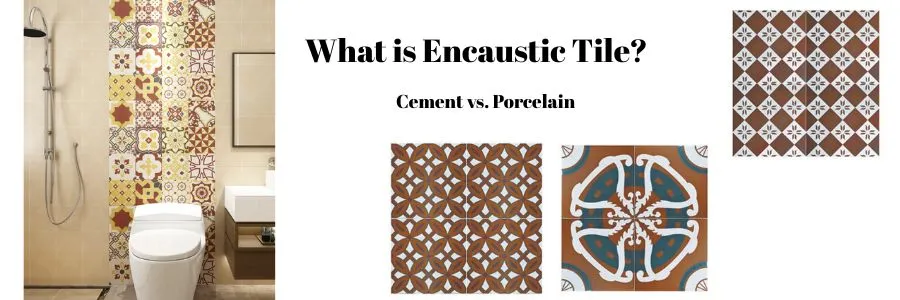
Have you been wondering about those beautiful patterned tiles you’ve seen in designer magazines? You’re likely looking at encaustic tiles! As a Chinese tile supplier specializing in these stunning products, I’m excited to explain exactly what makes encaustic tiles special and how to choose between cement and porcelain options.
(If you’re already familiar with encaustic tiles and want to learn about ordering them from China, check out our guide: Encaustic Porcelain Tile MOQ & Lead Times: China Import Guide)
What Are Encaustic Tiles?
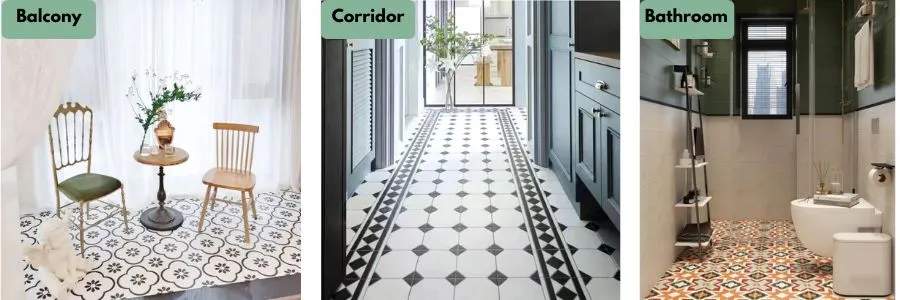
Encaustic tiles are decorative tiles featuring intricate patterns created with different colored materials. Unlike regular tiles where patterns are printed on top, true encaustic tiles have designs that run through the entire thickness of the tile.
The word “encaustic” originally referred to an ancient technique using colored wax. While modern encaustic tiles don’t use wax, they kept the name because of their similar appearance to those historical pieces. These tiles first became popular in medieval Europe, especially in churches and palaces, but have made a massive comeback in contemporary design.
How Traditional Encaustic Tiles Are Made
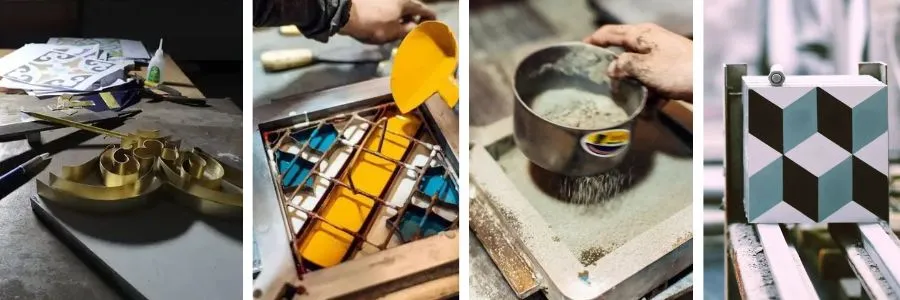
The traditional method for making encaustic tiles is fascinating:
- Artisans create metal dividers in the shape of the pattern
- Different colored clay or cement mixtures are poured into these sections
- The materials are compressed under high pressure
- The tile is cured or fired, depending on the materials used
This process ensures the pattern continues throughout the entire tile body. This means even as the tile wears down over decades, the design remains intact – unlike surface-printed tiles that can chip or wear away.
What Are Encaustic Cement Tiles?
Encaustic cement tiles (also called cement encaustic tiles or hydraulic tiles) are handmade using:
- Portland cement
- Marble powder
- Natural mineral pigments
- Sand
Each tile is individually crafted by skilled artisans who carefully pour colored cement into molds separated by metal dividers. After the pattern is set, a backing layer of cement is added, and the tile is hydraulically pressed with up to 2,000 pounds of pressure. The tiles then cure naturally over several weeks without firing.
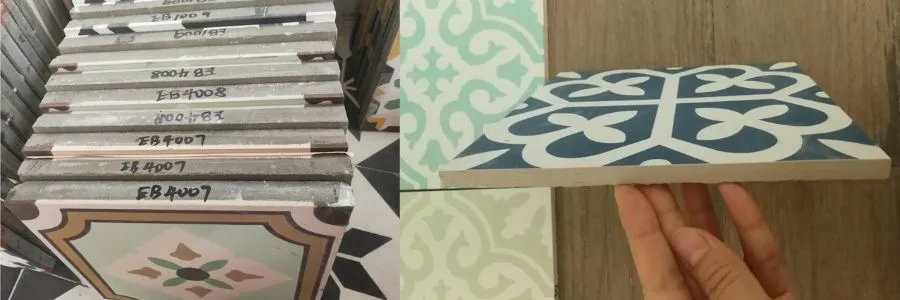
These tiles are typically thicker (about 5/8″ or 16mm) and heavier than other tile types. Because cement is naturally porous, these tiles require sealing before and after installation to protect them from stains and moisture.
What Are Encaustic Porcelain Tiles?
Modern encaustic porcelain tiles take a different approach:
Porcelain encaustic tiles are made from fine clay fired at extremely high temperatures (around 2300°F or 1260°C). Rather than using the traditional inlay method, manufacturers typically use advanced digital printing or silk-screening technologies to create designs that mimic the encaustic look.
The porcelain production process creates tiles with exceptional hardness, very low porosity, and resistance to stains and moisture. These tiles are typically thinner (around 3/8″ or 10mm) and more uniform in size than their cement counterparts.
Encaustic Cement Tile vs. Porcelain: 5 Key Differences
When choosing between these two types, consider these five important differences:
1. Material Composition Differences
- Cement tiles: Made from cement, marble dust, and pigments that cure at room temperature
- Porcelain tiles: Made from clay that’s fired at extremely high temperatures
2. Durability and Strength Comparison
- Cement tiles: Softer and more prone to wear over time, developing a natural patina
- Porcelain tiles: Extremely hard and resistant to scratches, chips, and wear
3. Weight and Installation Considerations
- Cement tiles: Heavier and thicker, requiring stronger substrate support
- Porcelain tiles: Lighter and easier to cut, more forgiving during installation
4. Color Vibrancy and Longevity
- Cement tiles: Colors can be richer initially but may fade slightly over time
- Porcelain tiles: Colors remain consistent for decades with minimal fading
5. Price Point Differences
- Cement tiles: Generally more expensive due to handcrafted production
- Porcelain tiles: More affordable, especially for larger projects
Best Applications of Encaustic Tiles
Ideal Places for Cement Encaustic Tiles:
- Feature walls in living rooms
- Low-traffic residential floors
- Accent pieces in bathrooms
- Designer kitchen backsplashes
- Boutique retail spaces seeking authentic character
Perfect Spots for Porcelain Encaustic Tiles:
- High-traffic commercial floors
- Outdoor patios and walkways
- Shower walls and bathroom floors
- Restaurant kitchens
- Any moisture-prone area
Encaustic patterns work beautifully with both modern and traditional design styles. The geometric patterns complement contemporary spaces, while floral and classic designs enhance vintage or Mediterranean aesthetics.
Maintenance and Care
For Cement Encaustic Tiles:
- Apply a penetrating sealer before grouting
- Reapply sealer every 1-2 years
- Clean with pH-neutral cleaners only
- Avoid acidic or abrasive cleaning products
- Wipe up spills immediately to prevent staining
For Porcelain Encaustic Tiles:
- No sealing required
- Clean with standard tile cleaners
- Resistant to most stains and spills
- Simple maintenance with regular sweeping and mopping
Conclusion
Both cement and porcelain encaustic tiles offer stunning design possibilities for your projects. Cement tiles provide authentic, handcrafted charm with a unique patina that develops over time. Porcelain offers exceptional durability and lower maintenance for busy spaces.
Your choice ultimately depends on:
- Your project’s specific requirements
- The installation location’s exposure to moisture and traffic
- Your budget constraints
- Whether you prefer authentic handmade character or consistent perfection
As a supplier of both types, I can help you determine which option best suits your specific project needs. When you’re ready to explore ordering options, don’t forget to check out our detailed guide on Encaustic Porcelain Tile MOQ & Lead Times to understand the ordering process from China.
Ready to Transform Your Space with Encaustic Tiles?
Contact us today for:
- Free samples of both cement and porcelain encaustic tiles
- Expert advice on which type suits your project
- Custom design consultations
- Detailed quotations including all shipping costs
Let’s bring your design vision to life with the perfect encaustic tiles!
Frequently Asked Questions About Encaustic Tiles
Q1: Are encaustic tiles suitable for bathrooms?
Answer: Yes, encaustic tiles can be used in bathrooms, but the type matters. Porcelain encaustic tiles are ideal for bathrooms because they’re naturally water-resistant and require minimal maintenance. If you choose cement encaustic tiles for your bathroom, they must be properly sealed before installation and periodically afterward to prevent water damage and staining. They work beautifully for bathroom walls or floors in residential settings with proper care.
Q2: Can encaustic tiles be used outside?
Answer: Yes, but again, the type is important. Porcelain encaustic tiles are excellent for outdoor use as they’re frost-resistant, won’t fade in sunlight, and can withstand temperature changes. Cement encaustic tiles are generally not recommended for outdoor use in most climates because they’re more porous and susceptible to weather damage, despite sealing. If you live in a consistently mild climate with minimal freezing, properly sealed cement tiles might work in covered outdoor areas.
Q3:How long do encaustic tiles last?
Answer: With proper installation and maintenance, porcelain encaustic tiles can last 50+ years with minimal signs of wear. Cement encaustic tiles in well-maintained indoor settings can last for generations, developing a beautiful patina over time. Many cement encaustic tiles in European buildings have lasted over a century!
Q4: Are encaustic tiles hard to maintain?
Answer: Porcelain encaustic tiles are very low-maintenance, requiring only regular cleaning with standard tile cleaners. Cement encaustic tiles require more attention, including periodic resealing every 1-2 years and cleaning with pH-neutral products only. Daily maintenance for both is simple – just regular sweeping and occasional mopping.
Q5: Can I install encaustic tiles myself?
Answer: While DIY installation is possible, I recommend professional installation, especially for cement encaustic tiles which require careful handling, precise spacing, and proper sealing. Porcelain encaustic tiles are more forgiving for DIY enthusiasts but still benefit from professional installation to ensure patterns align perfectly and the final result looks its best.
Q6: How do I choose the right encaustic tile pattern?
Answer: Consider your space size, existing décor, and desired impact. For smaller spaces, simpler patterns or smaller-scale designs prevent overwhelming the room. For larger areas, bold patterns create stunning statement floors or feature walls. Don’t forget to check out our Encaustic Porcelain Tile MOQ & Lead Times: China Import Guide if you’re planning a large project!