

When sourcing sanitary ware overseas, buyers face one big question: should you go straight to a factory or work with a trading company?
Many people assume factory direct is always better. But that is not always true. The right choice depends on your business, your order size, and how much time you have to manage the process.
This guide breaks down both options clearly so you can make the right call.
How Sanitary Ware Buyers Typically Source Products?
Most buyers use one of two ways to source sanitary ware from overseas.
Buying direct from a factory
Some buyers contact factories directly. They negotiate prices, place orders, and manage everything themselves. This works well for large, simple orders — but it takes a lot of work.
Working with a trading company
A trading company sits between the buyer and the factory. They source products from multiple sanitary ware factories, handle logistics, and manage quality checks on behalf of the buyer.
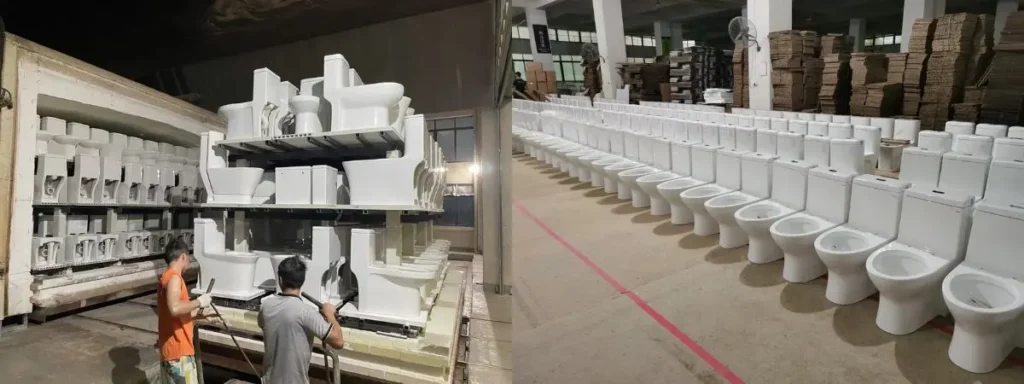
What a Factory Offers?
Factories make the products. That is their main job.
What you get
- Direct access to the manufacturer
- Potentially lower unit prices on large orders
- More control over product specs if you have the resources
- More room to negotiate on price and terms — when you are placing large orders consistently, factories are often willing to offer better pricing, longer payment terms, or priority production slots
- Easier to build a long-term exclusive relationship — some factories are open to exclusivity agreements for certain designs or markets, which can protect your product line from competitor
What you need to manage yourself
- All communication with the factories
- Quality checks and inspections
- Shipping, logistics, and customs paperwork
- Any problems that come up after the order
Factories are focused on production. Handling buyer concerns is often not their priority. Most Sanitary ware manufacturer have a minimum order of one 40-foot container. And that is just the starting point.
If your order is only two or three containers, that is considered a small order to most factories. Small orders often get less attention. Lead times can be longer. And after-sales service may be harder to get.
This is especially true for larger factories. They prefer to work with high-volume wholesalers and importers. If you are not one of their biggest buyers, you may not be treated like a priority.
What a Trading Company Brings to the Table?
A good trading company does more than just pass orders to factories.
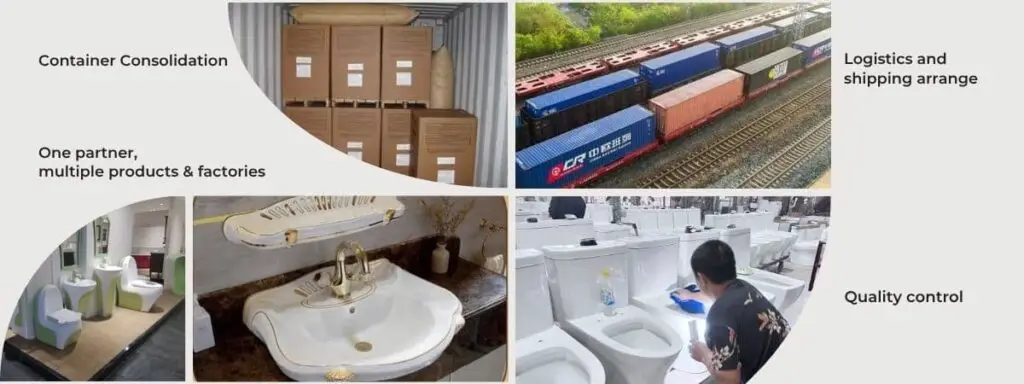
One partner, multiple products and factories
A trading company can source toilets, washbasins, and other sanitary ware from different factories. You deal with one contact. They handle the rest.
This is a big advantage for distributors and project managers who need more than one product type.
Consolidation saves you time and money
Without a trading company, you may need to contact several factories for one shipment. You would need to follow up with each one, coordinate delivery dates, and arrange container loading yourself.
A trading company handles all of this. They consolidate goods from different factories into one shipment. This saves time, reduces stress, and often lowers shipping costs.
Logistics and shipping experience you can rely on
Many factories are good at making products. But not all of them are experienced in export logistics.
A trading company knows how export shipping works. They understand freight terms, documentation, and customs requirements. This helps avoid costly delays.
Quality control is not a factory monopoly
Buying direct from a factory does not guarantee good quality. Some factories have little or no experience with export standards.
A professional trading company understands what quality standards buyers in different markets expect — such as CE, CUPC, Watermark, or WELS. In some cases, they can catch quality issues that an inexperienced factory would miss.
The Real Cost of Sourcing Sanitary Ware Direct from a Factory
Factory direct sounds simple. But the hidden costs add up.
Time is money
Communicating with multiple factories takes time. Following up on production, chasing shipments, and resolving problems all fall on you. For a distributor or project manager, this is time away from your core business.
What happens when quality problems occur
If goods arrive with defects, dealing with a factory directly can be slow and frustrating. Factories may push back, delay responses, or offer limited solutions.
A trading company works on the buyer’s side. They already have a relationship with the factory and can resolve problems faster.
Travel and inspection costs
Visiting a factory yourself costs money. If you source from multiple factories, those costs multiply. A trading company already knows their suppliers and can handle on-the-ground checks without extra cost to you.
When Factory Direct Makes Sense?
Factory direct is not always the wrong choice. In some situations, it is actually the better option.
Your order volume is very high and consistent
If you order large quantities regularly, factories will treat you as an important client. You get better pricing, faster responses, and more attention. The more you buy, the more leverage you have.
You only need one or two types of products
If your business focuses on a single product — say, toilets only — managing one factory relationship is straightforward. There is no need to coordinate multiple suppliers or consolidate shipments.
You have your own quality control team on the ground
Some experienced importers have their own QC staff or work with a trusted third-party inspection company. If quality checks are already covered, one of the main advantages of a trading company becomes less important.
You want full control over product development
Working directly with a factory gives you closer access to the production process. If you are developing a private label product or need custom specifications, direct communication with the factory can be faster and more flexible.
You have strong experience with overseas manufacturers
If you already know how to handle factory negotiations, production follow-ups, and export documentation, going direct can work well. The learning curve is steep, but experienced buyers can manage it efficiently.
That said, even when factory direct makes sense on paper, it still requires time, resources, and experience to manage well. For most distributors and project buyers, a reliable trading company can fill that gap.
Key Questions to Ask Before You Decide
Before choosing how to source, ask yourself:
- What is my order volume? Smaller or mixed orders in container are easier to manage through a trading company.
- How many product types do I need? If you need toilets, washbasins, and other items, a trading company saves you from managing multiple suppliers.
- Do I have local QC support? If not, a trading company’s quality checks are valuable. Or you can hire a 3rd-party inspection organization to check the quality for you on each order.
- How much time can I spend on logistics? Trading companies handle this for you.
Here is a quick side-by-side summary to help you decide.
.sw-table-wrap { padding: 1.5rem 0; font-family: -apple-system, BlinkMacSystemFont, ‘Segoe UI’, sans-serif; } .sw-table-wrap table { width: 100%; border-collapse: collapse; font-size: 14px; border: 1.5px solid #d1d5db; } .sw-table-wrap thead th { padding: 10px 20px; font-weight: 600; font-size: 14px; text-align: left; border-bottom: 2px solid #d1d5db; border-right: 1.5px solid #d1d5db; background: #f9fafb; } .sw-table-wrap thead th:last-child { border-right: none; } .sw-table-wrap thead th:first-child { color: #374151; width: 26%; } .sw-table-wrap thead th.col-f { color: #185FA5; } .sw-table-wrap thead th.col-t { color: #0F6E56; } .sw-table-wrap tbody tr { border-bottom: 1.5px solid #d1d5db; } .sw-table-wrap tbody tr:last-child { border-bottom: none; } .sw-table-wrap td { padding: 13px 20px; vertical-align: middle; color: #111827; line-height: 1.6; border-right: 1.5px solid #d1d5db; } .sw-table-wrap td:last-child { border-right: none; } .sw-table-wrap td:first-child { color: #111827; font-size: 14px; font-weight: 500; } .sw-table-wrap td:nth-child(2) { padding-right: 28px; } .sw-table-wrap td:nth-child(3) { padding-left: 28px; } .sw-badge { display: inline; font-size: 14px; font-weight: 500; background: none; padding: 0; border-radius: 0; } .sw-badge-good { color: #0F6E56; } .sw-badge-mid { color: #854F0B; } .sw-badge-weak { color: #A32D2D; } .sw-table-note { font-size: 12px; color: #6b7280; margin-top: 1rem; padding-top: 0.75rem; border-top: 1px solid #e5e7eb; }| 🏭 Factory direct | 🤝 Trading company | |
|---|---|---|
| Minimum order | High — typically 1×40′ container per factory | Flexible — mixed orders possible |
| Product range | One factory, limited range | Toilets, washbasins & more from multiple factories |
| Logistics support | Limited — you manage shipping | Experienced — consolidation & export handled |
| Communication | One factory per contact — multiple suppliers needed | Single point of contact for all products |
| Problem resolution | Slower — you negotiate directly | Faster — trading company follows up on your behalf |
| Unit price | Potentially lower on very large orders | Slightly higher — but includes services |
| Best suited for | High-volume, single-product buyers with own QC | Distributors & project buyers needing flexibility |
* Factory direct can work well for experienced buyers with large, consistent orders. For most distributors and project managers, a reliable trading company offers better overall value.
Conclusion
There is no single right answer. But for most sanitary ware distributors and project buyers, a reliable trading company offers real advantages.
You get one point of contact, combined shipments, logistics support, and quality oversight — all without needing your own team on the ground.
The key word is reliable. Not all trading companies are equal. Choose one with a clear track record, good communication, and honest answers about where their products come from.
Have questions about sourcing sanitary ware? We are happy to help. Contact us here and we will get back to you within 24 hours.
FAQ‘s for Factory vs Trading company
Q1: Is a trading company more expensive than buying from a factory?
Not necessarily. The unit price from a factory might look lower. But when you add up shipping costs, inspection fees, and the time you spend managing everything yourself, a trading company can actually cost less overall. It depends on your order size and how much your time is worth.
Q2: How do I know if a trading company is trustworthy?
Look for clear communication and honest answers. A good trading company will tell you where their products come from. They will share certificates, factory information, and inspection pictures when you ask. If a company avoids these questions, that is a red flag.
Q3: Can a trading company handle custom designs or OEM orders for sanitary ware?
Yes, many trading companies can. They work with factories that offer OEM services. This means you can get products made to your design or specifications. Just make sure to ask about minimum order quantities and lead times upfront.
Q4: What if there is a quality problem after the goods arrive?
This is where a good trading company earns its value. They already have a relationship with the factory. They can follow up, push for a solution, and help you get replacements or compensation faster than if you were dealing with the factory on your own.
Q5: Do trading companies only work with large orders?
No. In fact, flexible order sizes are one of the advantages of working with a trading company. They can combine your order with goods from different factories into one shipment. This makes smaller or mixed orders much more practical.
Q6: What certifications should sanitary ware products have?
It depends on your market. Common ones include CE (Europe), CUPC (North America), WELS (Australia). A reliable trading company will know which certifications apply to your market and make sure the products meet those standards.
Q7: Can a trading company source both toilets and washbasins from different factories?
Yes. This is actually one of their strengths. Instead of contacting separate factories for each product, a trading company can source everything you need and consolidate it into one shipment.