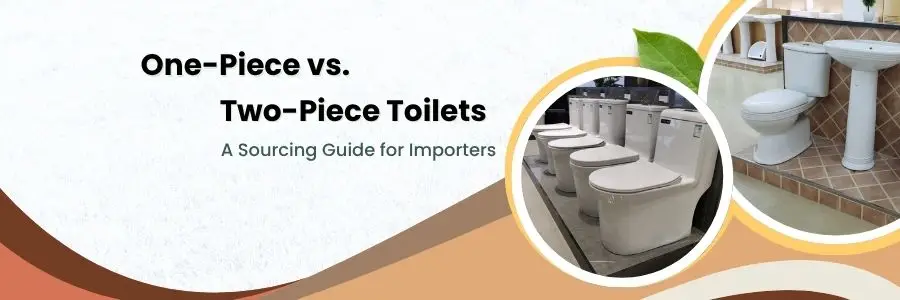
When you’re purchasing toilet from Chinese, one of the first question you need to think is: one-piece or two-piece? Which one fit your market or project?
It seems like a straightforward question — but the answer affects your factory price, your freight cost, and how well the product sells in your target market. I’ve put this guide together so you know exactly what you’re deciding before you confirm your order.
What Is a Two-Piece Toilet?
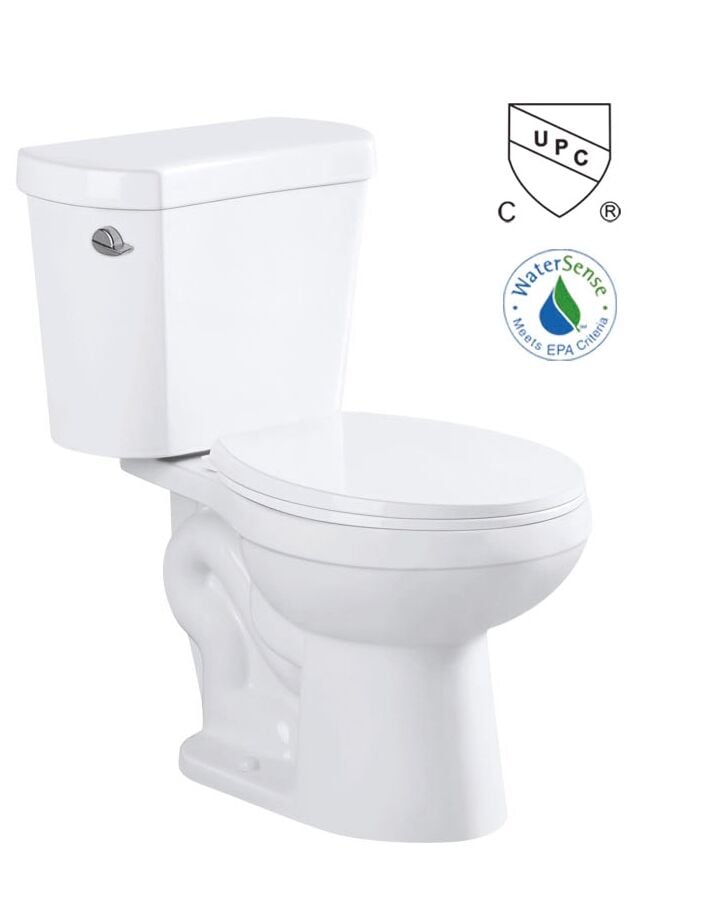
A two-piece toilet has the cistern (water tank) and the bowl made as two separate ceramic pieces. They’re bolted together during installation on-site.
This is the traditional design. It’s been around for over a hundred years, and it’s still the most common toilet type sold globally — especially in North America, South Asia, and Southeast Asia.
Why buyers still love two-piece toilets:
- Lower factory price
- Easier and cheaper to ship (lighter individual pieces, less breakage risk)
- Easier to replace just the cistern or just the bowl if one gets damaged
- More familiar to plumbers in many markets
The main visual giveaway is the visible joint between the tank and bowl, usually with two bolts at the base of the cistern. It’s a functional look — not the most elegant, but it gets the job done.
What Is a One-Piece Toilet?
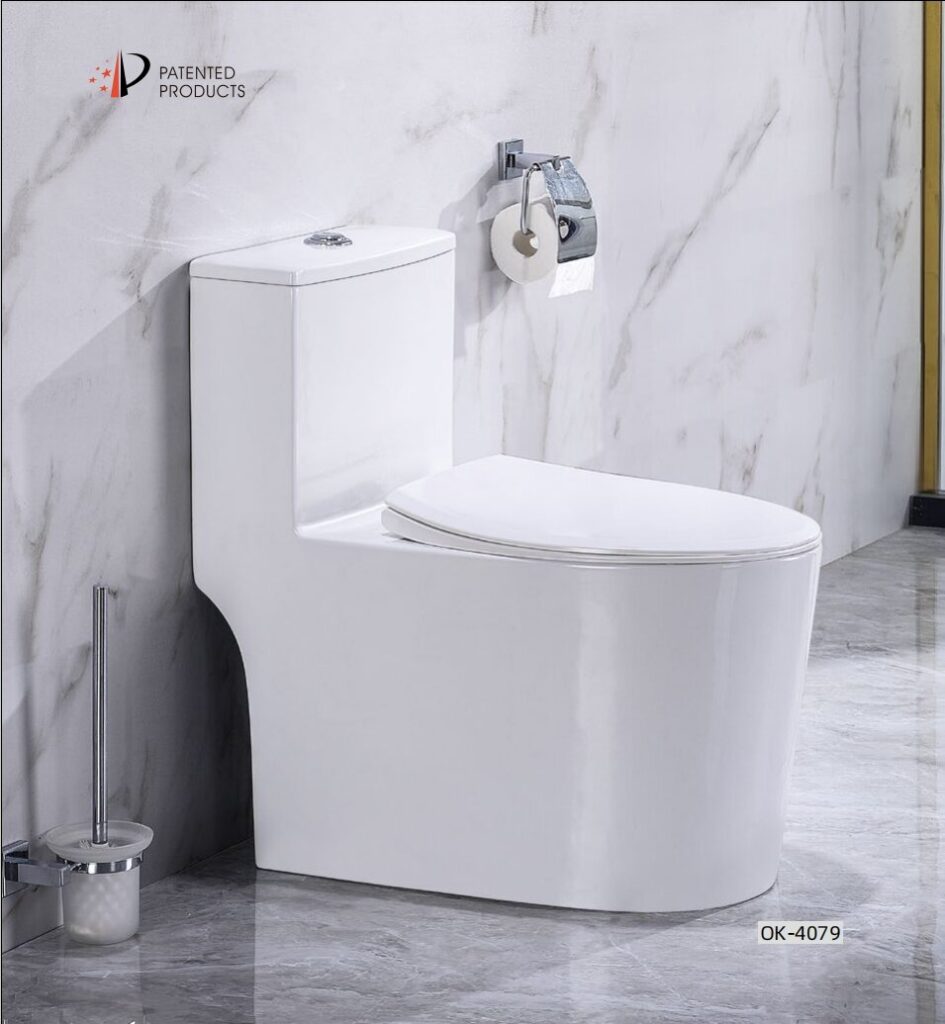
A one-piece toilet is exactly that — the cistern and bowl are fused together into a single ceramic unit, fired and glazed as one piece.
There’s no seam, no bolts, and no gap between the tank and the bowl. The result is a cleaner, more modern look that has become very popular in premium residential projects, hotels, and showrooms.
Why buyers choose one-piece toilets:
- Sleeker, more contemporary appearance
- Easier to clean (no gap between tank and bowl to collect dirt)
- Slightly lower profile — the cistern sits closer to the bowl
- Perceived as a premium product — often commands a higher retail price
The trade-off is cost. One-piece toilets are more expensive to manufacture because the larger single piece is harder to fire evenly in the kiln, has a higher defect rate, and requires more careful handling throughout production and shipping.
For more details about types of toilets, please read our ultimate toilet purchase guide.
One-Piece vs Two-Piece: Key Differences at a Glance
| One-Piece | Two-Piece | |
|---|---|---|
| Design | Seamless, modern | Classic, visible joint |
| Factory price | Higher | Lower |
| Shipping weight | Heavier | Lighter (split into 2 pieces) |
| Breakage risk in transit | Higher | Lower |
| Cleaning | Easier (no joint gap) | Slightly harder |
| Installation | Simpler (pre-assembled) | Requires joining on-site |
| Repair / replacement | Replace whole unit | Can replace cistern or bowl separately |
| Market perception | Premium | Standard |
| Best for | Hotels, premium residential, showrooms | Standard residential, large volume projects |
How They’re Made Differently
This is something most buyers don’t think about, but it directly affects price and quality.
Two-piece production: The cistern and bowl are fired separately. Because each piece is smaller and simpler in shape, the kiln success rate is high. Factories can produce two-piece toilets at scale with fewer defects and less waste. That efficiency is passed on to you in the price.
One-piece production: The entire unit — including the cistern integrated into the back — goes into the kiln as one large piece. The bigger and more complex the shape, the harder it is to fire evenly. Warping, cracking, and uneven glaze are more common. Factories compensate by producing smaller kiln batches and doing more quality inspection — which adds cost.
What this means for you as a buyer:
- One-piece toilets will always cost more at the factory level, even for the same ceramic quality
- If a one-piece toilet is priced the same as a two-piece from the same factory, ask questions — something has likely been cut
- Defect rates on one-piece toilets are typically higher than two-piece, so factories usually build this into the price
Shipping & Freight: The Hidden Cost Difference
This is one of the most overlooked factors when comparing one-piece and two-piece toilets.
Weight and volume: A standard two-piece toilet typically weighs 25–48 kg total (cistern + bowl shipped separately in two cartons). A comparable one-piece toilet weighs 35–52 kg — sometimes more, depending on the model.
More weight = higher sea freight cost per unit.
Packaging and breakage: One-piece toilets are harder to package safely. The integrated cistern creates an awkward, top-heavy shape that is more vulnerable to damage during container loading, sea transit, and last-mile delivery. A good factory will use foam-in-bag packaging or custom molded foam inserts — but this adds to the carton size and weight.
Two-piece toilets, being split into two smaller components, are easier to pack tightly and are generally more resilient in transit.
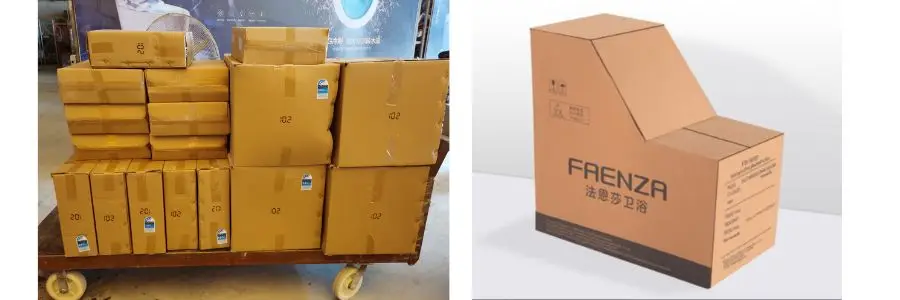
My recommendation: When comparing quotes, always calculate the landed cost ( Fob price + freight + insurance ), not just the FOB price. A one-piece toilet that looks like a 15% premium at the factory warehouse can easily become a 25–30% premium by the time it arrives at your warehouse.
Which Markets Prefer Which Style?
Understanding your end market is critical before you place an order.
🇺🇸 United States & Canada Two-piece toilets dominate the residential market. They’re what most American and Canadian buyers expect at the mid-range price point. One-piece toilets are growing in popularity for renovation and premium projects, but two-piece is still the volume seller.
🇪🇺 Europe Both styles are sold, but one-piece and close-coupled two-piece toilets are popular in the mid-to-premium segment. European buyers tend to care a lot about design aesthetics, so the clean look toilet are often preferred for visible bathroom spaces.
🇬🇧 United Kingdom Close-coupled two-piece toilets are the traditional standard. One-piece is gaining ground in the premium and hotel segment.
🌏 Middle East Hotel and luxury residential projects in the UAE, Saudi Arabia, and Qatar heavily favor one-piece toilets for the premium look. Volume residential projects often use two-piece.
🌏 Southeast Asia Both styles are sold. Two-piece is dominant in volume residential construction. One-piece is used in hotel projects and higher-end condominiums.
🇦🇺 Australia & New Zealand Two piece toilet is dominant in most contruction. The key requirement here is WELS certification — and both one-piece and two-piece toilets can carry WELS ratings. Check the specific model’s certification before ordering.
Installation Differences: What Your Buyers Need to Know
Two-piece installation: The bowl is bolted to the floor first, then the cistern is connected to the bowl with two bolts and a rubber gasket seal. The water supply line connects to the bottom or side of the cistern. This is straightforward work that any plumber is familiar with.
One thing to watch: if the rubber gasket between the cistern and bowl is poor quality, it can leak over time. Always check what gasket material the factory uses — silicone is better than standard rubber.
One-piece installation: Because the cistern and bowl are already joined, installation is actually simpler — there’s no joining step on-site. The unit just needs to be bolted to the floor and connected to the water supply. The downside is that the unit is heavier, so two people are usually needed to carry and position it.
Pros & Cons: Quick Q&A
1. What are the main advantages of a one-piece toilet?
Cleaner look with no visible joint, easier to wipe down and keep hygienic, and a stronger premium appeal that can support a higher retail price. Good choice for hotels, showrooms, and premium residential projects.
2. What are the disadvantages of a one-piece toilet?
Higher factory cost, heavier to ship, higher breakage risk in transit, and if one part gets cracked or damaged, the whole unit must be replaced — you can’t just swap the cistern.
3. What are the main advantages of a two-piece toilet?
Lower unit cost, lighter and easier to ship, lower breakage rate, and you can replace the cistern and bowl separately if needed. Widely accepted in the biggest volume markets.
4. One piece and two piece toilet, which type is more popular globally?
Two-piece is still the global volume leader, largely because it dominates the North American market and large parts of Asia. But one-piece is the faster-growing segment, driven by premiumization trends in the hotel, renovation, and high-end residential sectors.
Which One Should You Choose?
Here’s how I think about it:
Choose one-piece if:
- Your buyers are in the hotel, luxury residential, or premium renovation segment
- Your target market values modern bathroom aesthetics (Europe, Middle East, urban Asia)
- You can absorb slightly higher freight costs and breakage risk
- You want to position your brand at the mid-to-premium price point
Choose two-piece if:
- You’re targeting standard residential construction or volume projects
- Your primary markets are North America, South Asia, or Southeast Asia
- You need to keep landed costs as low as possible
- You’re new to toilet importing and want to minimize risk
Consider stocking both if:
- You serve multiple markets or market segments
- You want to offer a clear “basic / standard / premium” range to your buyers
- You’re building a brand and want full category coverage
Ready to Source?
Whether you’re looking for high-volume two-piece toilets for a residential project or premium one-piece units for a hotel, getting the right factory match makes all the difference.
If you’d like help finding reliable suppliers with the right certifications and quality track record, get in touch here. Tell me your target market — and I’ll point you in the right direction.
FAQ’s of One-piece and Two-piece Toilet
1. What’s the difference between “one-piece” and “close-coupled” toilets?
A close-coupled toilet is a type of two-piece toilet where the cistern sits directly on top of the bowl with no visible gap or pipe between them. It looks cleaner than a traditional two-piece but is still two separate ceramic pieces. A true one-piece toilet is fired as a single unit.
2. Which type has better resale value for distributors?
One-piece toilets generally carry higher margins because the perceived value is higher. A one-piece toilet retailing at $400 might have a landed cost of $90–110, while a two-piece at $200 retail might have a landed cost of $45–60. The margin percentage can be similar, but the absolute dollar margin per unit is usually higher on one-piece.
3. Can I order a custom design for either type?
Yes. Chinese factories in Foshan and Chaozhou offer OEM and ODM services for both one-piece and two-piece toilets. For custom molds, expect a tooling cost of USD $3,000–8,000 and a minimum lead time of 60–90 days for the first sample. Custom orders typically require a minimum order quantity (MOQ) of 200–500 units depending on the factory.
4. Which is better for a hotel project?
One-piece, in most cases. Hotels prefer the cleaner look and the easier daily cleaning routine for housekeeping staff.
5. Which should I stock if I’m just starting out importing toilets?
Start with two-piece. Lower cost, easier to ship, lower risk of freight damage, and it sells in the widest range of markets. Add one-piece to your range once you understand your buyers’ preferences.