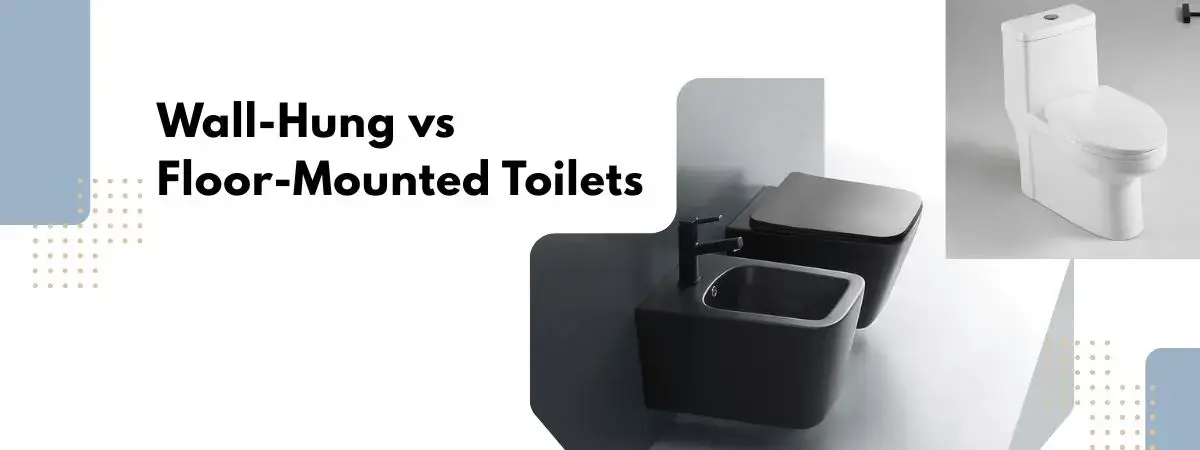
Walk into any high-end hotel bathroom in Europe or the Middle East, and you’ll almost certainly see a wall-hung toilet. Walk into a standard apartment in the US or Southeast Asia, and it’s almost always floor-mounted.
Both work well. But they serve very different markets, come with very different installation requirements, and have very different sourcing considerations. If you’re adding either — or both — to your product range, here’s what I think you need to understand before you place your first order.
What Is a Floor-Mounted Toilet?
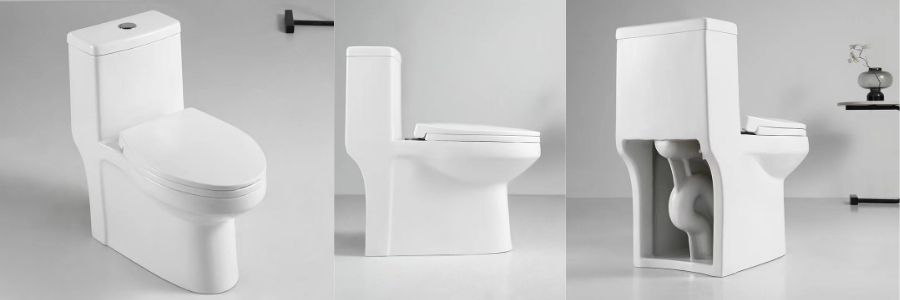
A floor-mounted toilet (also called a floor-standing toilet) is the traditional design. The base of the toilet bowl sits directly on the bathroom floor and is bolted down. The cistern either sits on top of the bowl (close-coupled), is mounted on the wall separately (semi-pedestal), or is hidden inside the wall (concealed cistern).
This is the most common toilet type in the world. It’s familiar, it’s straightforward to install, and it doesn’t require any special wall reinforcement. Plumbers everywhere know how to fit one.
Best suited for: Standard residential construction, volume projects, markets where installation simplicity matters, buyers who want the lowest total cost of ownership.
What Is a Wall-Hung Toilet?

A wall-hung toilet (also called a wall-mounted or back-to-wall toilet) has the bowl suspended off the floor — typically 15 to 43 cm above ground level. The cistern is completely hidden inside the wall cavity inside a steel frame called an in-wall frame or carrier frame.
From the outside, all you see is the bowl and a flush plate on the wall. There are no pipes, no visible cistern, no base touching the floor. The result is a clean, minimal look that’s become the default choice for premium bathrooms globally.
Best suited for: Hotels, luxury residential projects, premium renovations, markets where bathroom design is a key selling point.
Pros and Cons (Quick Q&A)
What are the main advantages of a wall-hung toilet?
Clean, premium look with no visible pipes or base. Easy to clean underneath. Adjustable bowl height during installation. Strong appeal for hotels, luxury residential, and design-conscious buyers.
What are the disadvantages of a wall-hung toilet?
Requires an in-wall frame — adds cost and complexity. Must be specified at the rough-in stage, not retrofitted easily. Repairs can be harder if there’s an issue inside the wall. Total installed cost is significantly higher than floor-mounted.
What are the main advantages of a floor-mounted toilet?
Simple and fast to install. Low total project cost. Familiar to plumbers everywhere. Easy to maintain and repair. Works in any market with no special wall preparation needed.
What are the disadvantages of a floor-mounted toilet?
The base and floor joint can collect dirt and is harder to clean. Less design-forward than wall-hung. Fixed bowl height.
Side-by-Side Comparison
| Wall-Hung | Floor-Mounted | |
|---|---|---|
| Cistern location | Hidden inside wall | On bowl or wall-mounted visible |
| Bowl position | Suspended off floor | Sits on floor |
| Installation complexity | High — requires in-wall frame | Low to moderate |
| Installation cost | Higher | Lower |
| Cleaning | Very easy — floor beneath is clear | Harder — base and floor join collects dirt |
| Design appeal | Premium, minimalist | Traditional to modern |
| Bathroom space feel | More open, spacious | Standard |
| Bowl height | Adjustable during install (15–43 cm) | Fixed |
| Factory price (bowl only) | Similar to floor-mounted | Standard |
| Total project cost (incl. frame + labor) | Significantly higher | Lower |
| Repair access | Harder — wall may need opening | Easy |
| Best markets | Europe, Middle East, premium Asia | North America, South/SE Asia, volume projects |
Want to know more information about importing toilet from China, read our ultimate toilet purchase guides.
The In-Wall Frame: The Part Most Buyers Forget
This is the single most important thing to understand about wall-hung toilets — and the part that catches new buyers off guard.
The bowl alone is only half the product. Every wall-hung toilet installation requires an in-wall carrier frame (sometimes called a concealed cistern frame or WC frame). This is a steel structure that gets built into the bathroom wall before the tiles go on. It holds the cistern, carries the weight of the bowl and the user, and provides the anchor points for the flush plate.
Why this matters for sourcing:
- The frame and cistern are often sold separately from the bowl
- Some factories supply the frame; many don’t
- If your buyer needs a complete system, you may need to source the frame from a different supplier — or confirm that your factory can supply both
- The most widely compatible frames in the global market are made by Geberit (Swiss) and Grohe (German) — these are premium brands. Chinese-made frames are available at significantly lower cost, but quality varies.
- The bowl must be compatible with the frame — not all bowls fit all frames. Always confirm compatibility before ordering
My recommendation: If you’re selling wall-hung toilets to project buyers (hotels, developers), sell the complete system — bowl + frame + flush plate — from a single source. It makes installation easier, reduces compatibility problems, and gives you a stronger value proposition.
Installation

This is the number one thing that floor-mounted vs wall-hung buyers argue about — so I’ll lay it out clearly.
Floor-mounted installation: The plumber bolts the bowl to the floor flange, connects the water supply to the cistern, and seals the base. A competent plumber can install a floor-mounted toilet in 30–60 minutes. There’s no structural work involved.
Wall-hung installation: The carrier frame needs to be built into the wall during the rough-in stage — before tiling. This means wall-hung toilets must be specified early in the construction process, not added as an afterthought. The rough-in work alone takes 2–3 hours, plus the frame needs to be set at the right height and leveled precisely. After tiling, the bowl is bolted to the frame, and the flush plate is fitted.
Total installation cost for a wall-hung toilet — frame + labor — is typically 3 to 5 times higher than a floor-mounted toilet. In most European markets, buyers accept this because wall-hung is simply the standard. In markets where it’s less common, this cost difference can be a barrier.
What to tell your buyers: Wall-hung toilets must be specified at the design stage, not during fit-out. If a developer or contractor comes to you mid-construction asking to switch to wall-hung, it may already be too late without significant extra work.
Maintenance and Repairs
Floor-mounted toilets are straightforward to maintain. The cistern is accessible, parts are easy to replace, and any plumber can do the work.
Wall-hung toilets are a different story. If the concealed cistern develops a fault — a faulty fill valve, a slow leak inside the wall — accessing it requires opening the flush plate and reaching into the wall cavity. Most modern frames are designed with this in mind, and the service kit (fill valve, flush valve) can usually be accessed through the flush plate opening without breaking tiles.
However, if there’s a more serious issue — a cracked cistern, a frame problem — the wall may need to be partially opened. This is rare with quality frames, but it does happen with cheaper units.
For buyers sourcing wall-hung toilets for hotels or rental properties: I’d recommend specifying frames from established brands or reputable OEM manufacturers with a proven track record. The frame is the part that’s hidden in the wall for 20+ years — this is not the place to cut costs.
What Do Buyers in Different Markets Actually Want?
Europe Wall-hung is the dominant style in new construction across most of Western and Northern Europe. In Germany, the Netherlands, Scandinavia, and increasingly the UK, it’s the default specification for both residential and commercial projects. Floor-mounted is still found in older buildings and budget projects.
United Kingdom Shifting toward wall-hung in new builds and renovations, but floor-mounted close-coupled toilets remain common in the existing housing stock. Both styles sell well.
Middle East Hotel and luxury residential projects almost universally specify wall-hung. The Gulf market has strong demand for complete wall-hung systems with premium flush plates. Floor-mounted is used in standard residential.
United States & Canada Floor-mounted is the overwhelming standard. Wall-hung toilets exist in the US market but are a niche product — mainly found in high-end renovations and commercial office fit-outs. Installation trade knowledge for wall-hung is limited, which is a real barrier to adoption.
Southeast Asia Floor-mounted dominates across the region. Wall-hung is growing in the hotel and luxury condo segment in markets like Singapore, Bangkok, and Kuala Lumpur — but it’s still a minority choice in volume residential construction.
Australia & New Zealand Both styles are sold. WELS certification is required regardless of style. Wall-hung is popular in premium renovations; floor-mounted leads in volume residential.
Sourcing Checklist
Before placing your order, confirm these points with your supplier:
- For wall-hung bowls: Which frames is this bowl compatible with? (Ask for a compatibility list)
- Does the factory supply the in-wall frame and cistern, or just the bowl?
- What is the frame load rating? (Should be 400 kg minimum)
- What flush plate options are available? (Chrome, matte black, brushed gold — popular finishes vary by market)
- What certifications does the frame carry? (EN 14688 for bowls in Europe; check local frame standards)
- For floor-mounted: What is the rough-in distance? (Standard is 305 mm in North America, varies in Europe)
- What is the packaging for wall-hung bowls? (More fragile fixing points — needs good foam protection)
- Is after-sales service kit available? (Fill valve and flush valve for the concealed cistern)
Ready to Source?
Whether you need floor-mounted toilets for a large volume residential project or a complete wall-hung system for a hotel fit-out, getting the product spec right from the start saves a lot of trouble later.
If you’d like help matching the right product to your project requirements, reach out here. Share your target market, project type, and volume — and I’ll help you find the right fit.
FAQ‘s of wall hung and floor mounted toilet
1. Can wall-hung toilets hold heavy users?
Yes. A properly installed wall-hung toilet with a quality carrier frame is rated to hold 400 kg or more. The frame — not the wall tiles — carries the load. The key is using a frame that meets the relevant load-bearing standards and is installed correctly.
2. Which is better if I’m just starting out? Start with floor-mounted. It’s easier to sell, cheaper to ship, works in more markets, and requires no special sourcing knowledge about frames and compatibility. Add wall-hung once you understand your buyers’ needs.
3. Is the wall-hung toilet bowl the same as a floor-mounted bowl?
No. Wall-hung bowls are specifically designed to mount onto a carrier frame. They have a different fixing point configuration and are not interchangeable with floor-mounted bowls. Always source the right bowl for the right application.
4. Which is better for a hotel project?
Wall-hung, in most cases — especially in Europe and the Middle East. Hotels benefit from the easy cleaning, the premium appearance, and the adjustable height for accessibility compliance. Specify the frame, flush plate, and bowl as a complete system.