Sizes and thickness are things I think about a lot when sourcing sintered stone. Get them wrong, and you may end up with extra cutting costs, higher shipping fees, or a look that doesn’t match what your clients wanted. So, I wanted to write down what I’ve learned.
In my last article, I compared sintered stone with quartz, porcelain, and marble. If you haven’t read that yet, you can check it out here: Sintered Stone vs Quartz vs Porcelain vs Marble. This time, I want to go deeper into slab sizes, thickness, textures, and how to choose the right specs for your project.
Common Sintered Stone Slab Sizes
Sintered stone comes in many large slab sizes. Some of the most common sizes I see are:
- 900×1800mm
- 800×2600mm
- 900×2700mm
- 1200×2400mm
- 1200×2700mm
- 1200×2800mm
- 1200×3000mm
- 1600×3200mm
Big slabs like these give you fewer seams on the wall, floor, or countertop. This means a cleaner look, especially for large spaces.
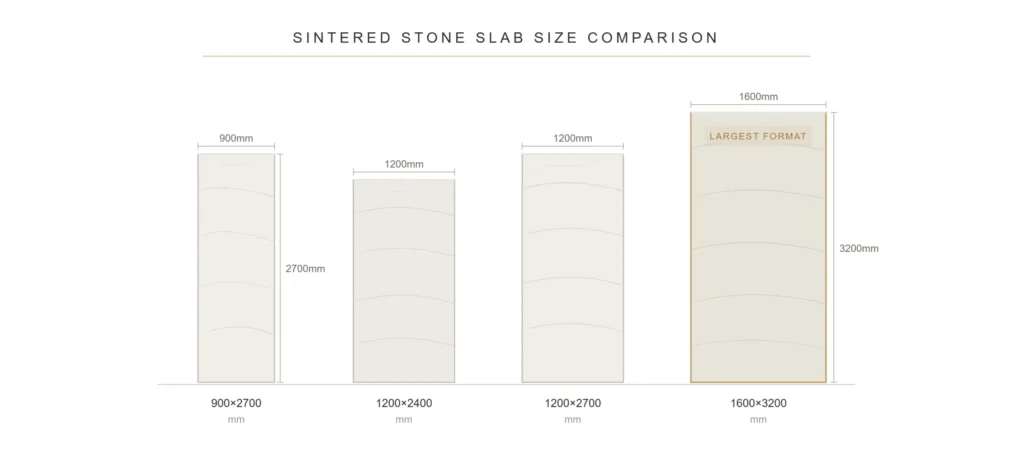
Here’s one tip that many buyers miss. The sample your supplier sends you is usually a small piece, maybe 10x10cm or a bit bigger. But a full slab can be over 3 meters long. A tiny sample only shows you a small part of the pattern. Before you commit to a big order, ask your supplier for a photo of the full slab patterns. Also ask if the pattern repeats across one single design, or if there are several different faces. This makes a big difference once the slabs are installed side by side on a large wall or floor.
Common Thickness and It’s Usage
Thickness is not just a number. Each thickness works better for certain jobs.
3mm and 6mm (thin slabs)
These thin slabs are popular for furniture panels, cabinet doors, and door facing. They are also widely used on walls, including outdoor walls. This is especially popular in Central Asia, where lightweight wall cladding is in high demand.
9mm
This is a common choice for interior walls and floors. It gives a good balance between strength and weight.
12mm
This is the most common thickness for floors and countertops. It offers strong durability for daily use.
15mm and above
This thickness works best for heavy-duty countertops, big kitchen islands, or custom shapes that need extra strength. It’s also common in commercial projects.
Texture and Design Options
Sintered stone comes in many surface designs. The most common types I see are:
- marble-look
- concrete-look
- wood-look
- solid color
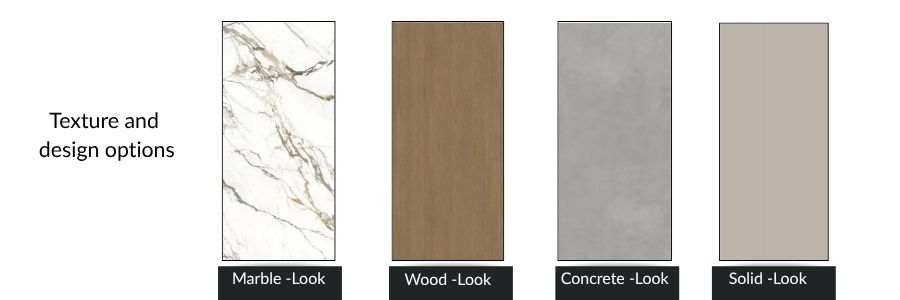
Marble-look and wood-look designs deserve a bit more attention here. Some wood-look sintered stone slabs look so close to real wood, you almost can’t tell the difference. But unlike real wood, they don’t warp, they don’t get eaten by insects, and they handle moisture much better.
This opens up new options. Think about places where wood was never a good fit before — bathroom vanities, kitchen countertops, or areas with high humidity. Now you can bring that warm wood look into these spaces, without worrying about damage over time.
Concrete-look sintered stone has become popular too, especially for modern, minimal interior styles. It works well for feature walls and countertops where a clean, industrial look is the goal. Unlike real concrete, it won’t crack or stain the same way, so it holds up better over time.
Solid color slabs are simple but useful. They work well for large open spaces where you don’t want a busy pattern competing with other design elements. Many kitchen and bathroom projects use solid colors for a clean, modern base look, then pair them with a patterned slab somewhere else in the room for contrast.
Different markets tend to like different finishes. It helps to ask your buyer or check what’s trending in their region before choosing a texture line to focus on. Want to see our product designs, visit our sintered stone slab page.
Sintered Stone Application
Walls
Thin slabs are perfect for wall panel applications. It’s slim, light weight, and high flexibility make installation easier and more manageable.
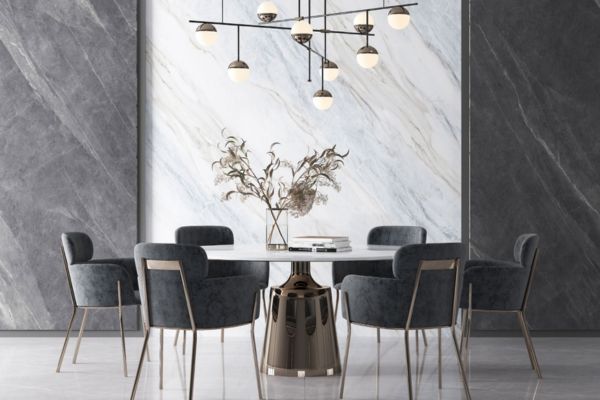
Furthermore, large-format sintered stone slabs—available in heights of 2.4, 2.7, 2.8, and 3 meters—enable a single piece to span the full height from floor to ceiling, significantly speeding up the installation process. And with fewer seams and a genuine stone-effect surface, make its layout for walls be parallel to the natural stone.
Floors
Sintered stone is stain- and wear-resistant, making it highly suitable for walls and flooring.
They can handle daily foot traffic, and a thicker option like 9-12mm is very common.
Facades
Sintered stone panels are a good alternative for building facades due to their physical properties, which include fireproofing, frost resistance, and high temperature tolerance.
Meanwhile, thin, lightweight slabs work well here too, especially in markets like Central Asia where outdoor wall cladding demand is growing.
Countertops
This is where sintered stone really stands out. It supports thermoforming, which means it can be shaped into curves. This is great for rounded countertop edges, kitchen islands, and even integrated basins.
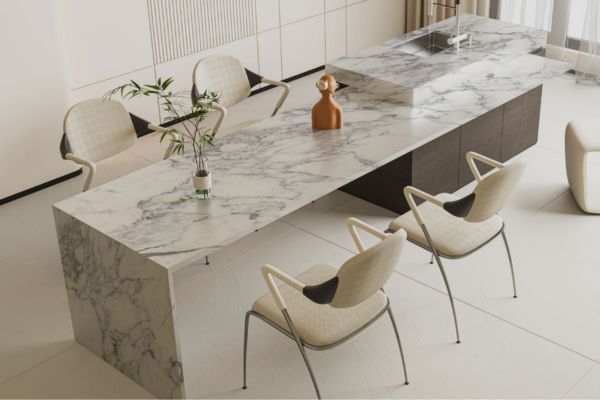
Integrated basins and vanity tops
Sintered stone is also used to make integrated basins, where the sink and countertop are shaped from one single piece. This gives a clean, seamless look with no joints where water can collect or dirt can build up, which makes cleaning much easier. This application relies on the thermoforming process I mentioned earlier, since the basin shape needs to be curved and molded from the flat slab.
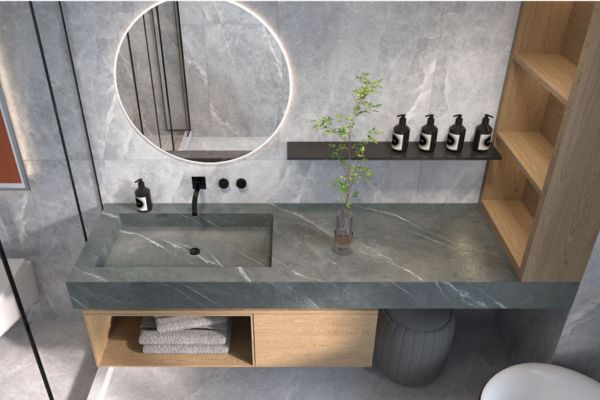
Furniture panels
As I mentioned in my last article, sintered stone has become a top choice for furniture panels in the last two to three years. It resists insects, doesn’t warp, and is easy to clean.
What to Check When Sourcing For Countertops & Vanities
If your project is for countertops or vanity tops, here’s what need to pay attention to:
- Thickness: 12mm is the common starting point. For heavy-use projects, 15mm or more is safer.
- Water absorption rate: This is a good number to ask your supplier for. Lower water absorption means better resistance to stains and moisture.
- Surface flatness: Check that the surface is even, with no bowing or warping.
- Edge quality: Look closely at the edges for chips or rough spots.
- Color consistency: Compare slabs from the same batch to make sure the color and pattern match well.
If you’re sourcing an integrated basin or vanity top, there are a few extra things worth checking:
- Adhesive quality: The glue used to join the basin to the countertop matters a lot. Poor quality adhesive, or bad workmanship at the joint, can cause the basin to loosen or separate from the countertop over time. This is a real problem I’ve seen happen more than once, so it’s worth asking your supplier what adhesive they use and how the joint is finished.
- Edge and joint finishing: Check how smooth and tight the seam is where the basin meets the countertop. A rough or uneven joint is often a sign of rushed workmanship, and it’s usually the first place that fails.
- Basin design and drainage: Beyond looks, make sure the basin shape is practical. Check the depth, the slope toward the drain, and make sure water flows out properly without pooling. A basin that looks great but drains poorly will lead to customer complaints down the line.
What to Check When Sourcing Wall Panels (Especially Outdoor)
Outdoor wall panels need a bit more care, since they deal with weather, temperature changes, and sometimes freezing conditions. Here’s what matters most:
- Water absorption rate: This number tells you a lot. Lower water absorption means less water gets into the slab. Less water means lower risk of cracking when temperatures drop below freezing.
- Breaking strength: This tells you how well the slab resists bending and cracking under pressure. Along with water absorption, this gives you a good picture of how the slab will perform outdoors over time.
- Weight: This is one of the most important things to check for outdoor wall panels. Heavier slabs put more load on the building’s overall structure and the wall’s dry-hang system. Before finalizing a project, it’s worth checking with a structural engineer whether the building can support the total weight, especially for tall buildings. Heavier panels also make installation more difficult, since the dry-hang system needs to safely hold that weight in place over time. In general, the heavier the panel, the more careful the installation work needs to be.
- Mesh backing: For tall buildings, some suppliers add a mesh layer to the back of the slab. This adds a bit of cost, but it’s a smart safety choice. If the slab ever cracks, the mesh helps keep the pieces from falling and causing injury below.
- Installation method: Outdoor panels usually use a dry-hang installation system. This needs precise drill holes and strong bending strength, so it’s worth confirming your supplier can handle this level of processing.
- Inspection tips: Check for warping, and make sure the drill holes line up correctly for the mounting hardware.
Custom Sizes and Processing
Sintered stone can be made in custom colors and sizes. Minimum order quantities are usually around 1,000 to 2,000 square meters, though this can change depending on the surface finish or color line you want. It’s best to confirm the minimum order with your supplier early on, so you’re not caught off guard later.
For processing, China has many factories that specialize in cutting and shaping sintered stone. They can cut slabs to size, and some can do thermoforming to create kitchen islands, curved edges, or one-piece basins. But quality varies a lot between these factories. Before choosing a processing partner, it helps to ask for past project photos, check their success rate with thermoforming, and confirm they have the right equipment for the shapes you need.
Conclusion
Choosing the right slab really comes down to matching the size, thickness, and finish to where it will be used. Bigger isn’t always better, and thicker isn’t always necessary. It depends on the application.
If you want to learn more about how to check a supplier’s reliability before placing an order, I wrote a guide on that here: How to Choose a Reliable Sintered Stone Supplier (will update in August) .
If you have a specific project in mind and want help figuring out the right specs, feel free to reach out. We’re happy to send samples and talk through the details with you.
FAQ Section
1. What is the standard slab size for sintered stone?
There isn’t just one standard size, since it varies by factory. Common large formats include 1200x2400mm, 1200x2700mm, and 1600x3200mm, among others. Always confirm the exact standard sizes with your supplier before ordering, since not every factory uses the same set of dimensions.
2. What thickness should I choose for a kitchen countertop?
12mm is the most common starting point for countertops, offering a good balance of strength and weight. For heavy-use projects or large kitchen islands, 15mm or thicker is a safer choice.
3. Can sintered stone be used outdoors?
Yes. Thin, lightweight slabs, usually 3mm or 6mm, are widely used for outdoor wall cladding. For outdoor projects, it’s important to check the water absorption rate and breaking strength, since these numbers tell you how well the panel will hold up against temperature changes and freezing conditions.
4. Can sintered stone be custom made in specific colors or sizes?
Yes, most factories offer custom colors and sizes, but minimum order quantities are usually around 1,000 to 2,000 square meters, depending on the surface finish and design you want. It’s best to confirm the minimum order with your supplier early in the process.