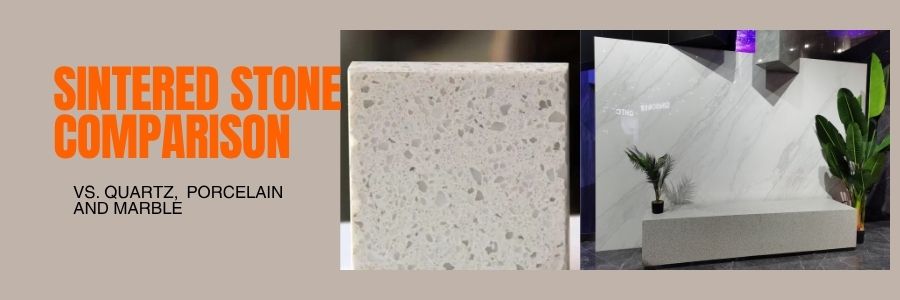
We’re a trading company in China. We source and supply porcelain tiles and sintered stone. Over time, I’ve learned a lot about how these materials compare, mostly by asking questions and digging into the details myself. One thing keeps coming up: buyers want to know if they should go with sintered stone, or stick with quartz, porcelain, or marble.
There is no single right answer. Each material has its own advantages. In this article, I want to share what I’ve learned so far. This is not a science lesson. I want to help you think through which material might fit your market and your customers better.
Before I go into the comparison, let me say a few words about sintered stone itself. It is made by pressing natural minerals together and firing them at very high heat. This process makes the slab very dense and strong. Because of this, sintered stone often performs better than other materials in heat resistance, size options, and long-term durability. If you want to understand the full picture of what sintered stone is and how it’s made, I will write a separate guide on that here: What is Sintered Stone? A Complete Guide.
Now let’s go through each comparison one by one.
Sintered Stone vs Quartz
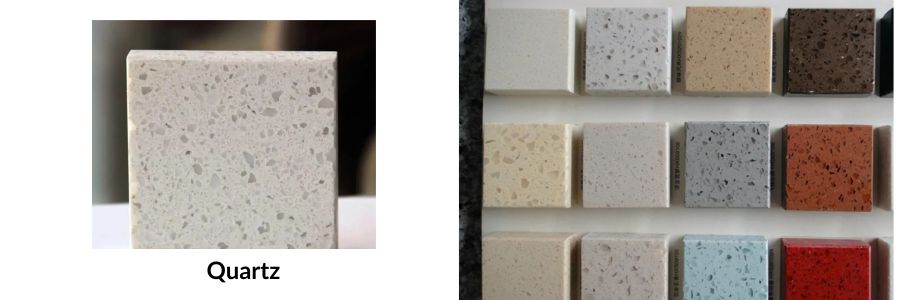
Quartz stone is an eco-friendly, reusable, and non-radioactive decorative material that overcomes the flaws of natural stone—such as color variations, voids, and cracks.
Quartz is made from crushed quartz stone mixed with resin and pigments. This resin makes quartz slabs a dense structure, high wear resistance and extremely low water absorption, but it also brings a weak point: not heat resistant.
Quartz does not like high heat. If you put a hot pan directly on a quartz counter, you may see burn marks or color change over time. Sintered stone does not have this problem. It can handle direct heat much better, because it goes through a high-temperature firing process during production. Now some high-end sintered stone slabs feature food-grade surfaces that are safe and eco-friendly, are commonly use sintered stone as a countertop for cooking food in the restaurants.
Size is another difference, and this one matters a lot for sourcing. Quartz slabs usually come in sizes like 1400x3000mm, 1600x3200mm, or 750x2440mm. Sintered stone offers more size choices overall, and it can go much thinner too, starting from just 3mm, while quartz usually stays in the 12-30mm range. Thinner slabs mean lighter weight, easier handling, lower shipping cost, and can be widely used in various applications.
Cutting and processing is another point worth mentioning. Sintered stone is generally easier to cut and shape compared to quartz. As for quartz, I would strongly recommend purchasing slabs that have already been cut to size at the factory; cutting them yourself during installation is more difficult, it’s hard and very thick, and the edges and corners require extensive grinding and polishing.
Here is something worth thinking about: if your buyer is targeting outdoor projects or kitchens with heavy cooking use, sintered stone is usually the safer choice. If your buyer wants a softer, warmer surface feel for indoor countertops only, quartz still a very good option.
Sintered Stone vs Porcelain Tile
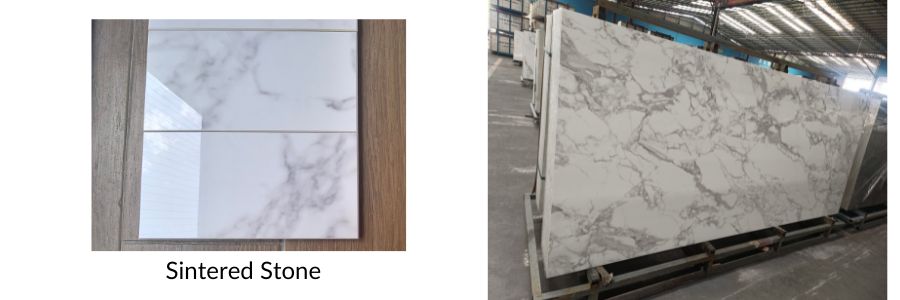
This is the comparison I get asked about the most. Many people think sintered stone and porcelain slab are basically the same thing with different names. I understand why they think this. Both are made from similar raw materials, and both go through a firing process and the apperance also looks very similar.
For this question, as a supplier with several years experience in the a porcelain tile industry, I will compare sintered stone and traditional porcelain tiles across various aspects—such as raw material composition, production machinery, firing temperatures, appearance, performance, and applications—to help you understand the differences between them.
1. Raw materials and production
Sintered stone is made primarily from silica, inorganic clay, and feldspar powder, whereas ceramic tiles are composed of materials such as kaolin, quartz sand, and silicates.
There is also a significant difference in the tonnage of the pressure machine used for their production. Ceramic tiles are typically produced using presses in the 3,000- to 8,000-ton range, with only a few factories employing 10,000-ton presses; in contrast, the production of sintered stone requires pressures with a capacity of 15,000 to 30,000 tons. This difference in pressing force results in a denser body for the finished product.
Sintered stone is fired at a higher temperature, usually between 1200°C and 1500°C. Porcelain tile is fired at a lower range, usually between 1100 – 1300°C. This higher firing temperature gives sintered stone a denser structure. That density is part of why sintered stone often performs better in strength and wear resistance compared to standard porcelain tile.
2. Appearance and peformance
From the surface, there is no big difference between porcelain tiles and sintered stone; both feature patterns that mimic natural stone, mable, wood, concrete, or solid colors.
Size range is another point worth noting. Porcelain covers a much wider range, from small tiles like 300x300mm, 300x600mm and 600x600mm, all the way up to large slabs like 1200x2400mm, but most ranges are smaller than 900x1800mm. While sintered stone, from the very beginning, was built around large-format production, for example: 800x2600mm, 1200x2400mm, and 1200x2700mm. This is one reason sintered stone became popular so fast in countertop and large surface applications.
I go deeper into slab sizes, thickness options, and where each format works best in this article: Sintered Stone Slabs and Panels: Sizes and Applications ( will post later this month ).
In terms of performance, porcelain tile is comparable to sintered stone regarding water absorption, wear resistance, stain resistance, and corrosion resistance. However, sintered stone has lower water absorption and provides better corrosion and impact resistance than porcelain.
3. processing and applications
One most difference between porcelain and sintered stone is: processing and application.
Sintered stone offers exceptional versatility; it can be thermoformed (which means it can be heated and shaped into curves) and cut, serving not only as a decorative material for walls and floors but also finding wide application in countertops, tabletops, facades, integrated washbasins, and more. In contrast, the application range of porcelain has more limites here, as they are primarily used for walls and floors.
If you’re working on bathroom vanities or kitchen islands with rounded edges, sintered stone gives them more design freedom.
Sintered Stone vs Marble
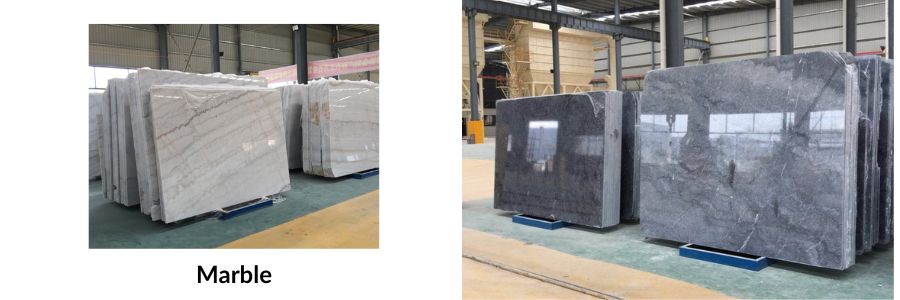
Marble is a natural stone. It comes in a variety of types and colors, with its stunning, unique and natural textures, it has a beauty that man-made materials still try to copy. But natural stone comes with natural limits.
Marble has a porous structure. This means liquids can soak into it over time. Things like lemon juice, wine, or vinegar can leave marks if not cleaned quickly. Marble also needs regular sealing to keep it protected. Sintered stone does not have this issue. It resists stains and acid very well, so it needs much less maintenance over the years.
Size is also limited by nature itself. Marble slabs usually stay under 3.3 meters in length and 2 meters in width, because they come from natural stone blocks. Sintered stone slabs can reach 1600x3200mm consistently, since they are manufactured, not mined. And the thickness of marble usually is thicker, such as 16-18mm, 20mm or 30mm, while the sintered stone mostly are less than 20mm.
One area where marble still holds strong ground is heat resistance. So if your buyer wants a natural look and stunning appearance, and have efficent budget, marble is still an excellent option for countertop, wall and floors, especially for high-end projects, just need more maintance.
Why Sintered Stone Is Taking Over Furniture and Countertops
I want to share something I have noticed over the last two or three years. Sintered stone is not just competing in walls and floors anymore. It has become one of the top choices for furniture panels, bathroom vanities and kitchen countertops.
Why? Buyers and end customers want surfaces that don’t warp, don’t get damaged by insects, and are easy to clean. Traditional furniture panel materials do many things well. But they were never built to handle moisture, heat, and daily wear the way sintered stone can.
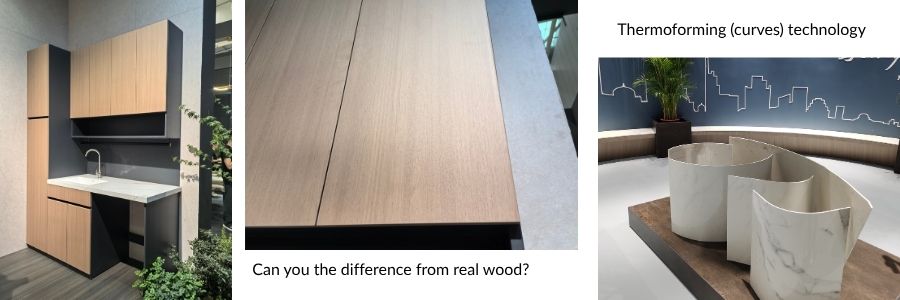
This reminds me of something I think about often in the tech world. Sometimes a product does nothing wrong. It just gets left behind because something better fits the moment. That is what seems to be happening with traditional furniture panels right now. They are not bad materials. But sintered stone simply fits where the market is heading, and it’s winning more space every year.
If you are sourcing for furniture makers or bathroom & kitchen suppliers, this trend is worth paying close attention to.
Quick Comparison Table for Different Materials
| Sintered Stone | Quartz | Porcelain | Marble | |
|---|---|---|---|---|
| Common sizes | 900×1800 to 1600x3200mm | 750×2440 to 1600x3200mm | 300x600mm to 1200x3200mm | Up to 3.3m x 2m |
| Thickness range | 3-20mm | 12-30mm | 3-20mm | 15-30mm |
| Heat resistance | Excellent | Weak (resin content) | Excellent | good |
| Stain/acid resistance | Excellent | Excellent | Excellent | Weak (porous) |
| Thermoforming (curves) | Yes | No | Limited | No |
| Best for | Countertops, furniture panels, wall and floor use | Indoor countertops | Walls, and floors | High-end natural look wall & floor, and table tops |
| Cost level | Mid-high | Mid-high | Low-Middle | High |
Which One Should You Choose?
I will not tell you one material beats all the others. That would not be honest sourcing advice. What I can tell you is this:
Sintered stone works across walls, floors, and countertops all at once. If you want one material that can cover a whole project — kitchen countertop, backsplash, and even furniture panels — sintered stone gives that flexibility, better heat resistance and easier maintenance than most alternatives.
Quartz is mainly used for countertops, and it’s also used for indoor walls in some projects. If you are focused on indoor countertops or interior wall surfaces, and where heat resistance is not a top concern, quartz can still a pretty good choice.
Porcelain tile is mainly used for walls and floors, with a much wider range of sizes and thicknesses to choose from. For general wall and floor coverage on a budget, porcelain remains a practical option.
Marble is similar to sintered stone in terms of application range — it works for walls, floors, and countertops too. If you want a premium natural stone look, and are willing to handle more maintenance and can accept a higher budget, marble is still a strong choice.
Sourcing the right material is only half the job, though. Finding a supplier you can actually trust is the other half. I put together a full guide on how to check manufacturers and brands properly before you commit to an order: How to Choose a Reliable Sintered Stone Supplier ( Preparing the data, will post in August ).
If sintered stone sounds like the right fit for your business, and you’re looking for a supplier to work with, feel free to reach out. We’d be glad to provide samples and talk through sizes, thickness, and pricing for your specific project. Or you can also visit our product page to see some sintered stone designs.
FAQ Sections
1. What is sintered stone made of?
Sintered stone is made from natural minerals, pressed together and fired at very high temperatures, usually between 1200°C and 1500°C. This process makes the slab dense, strong, and resistant to heat, stains, and scratches.
2. Is sintered stone the same as porcelain?
Not exactly. They share similar raw materials, but sintered stone is fired at a higher temperature than porcelain tile. This gives sintered stone a denser structure, which is part of why it often performs better in strength and large-format applications.
Another difference shows up in processing. Sintered stone can go through thermoforming, which means it can be heated and shaped into curves. This gives it more flexibility for things like rounded countertop edges and integrated basins. Porcelain doesn’t offer this same level of flexibility during processing. This is also the reason why sintered stone are more widely used in the furniture panel and counterops.
3. Is sintered stone better than quartz?
It depends on the application. Sintered stone handles heat much better and offers more size and thickness options. Quartz can still be a good choice for indoor countertops, especially where heat resistance is not a big concern, it’s still a classic material for countertops.
4. Can sintered stone be used for kitchen countertops?
Yes. Sintered stone is increasingly popular for kitchen countertops because it resists heat, stains, and scratches well, and it doesn’t need regular sealing like natural stone does.
Its strong heat resistance also makes it compatible with heated countertop features, which can be a nice touch for clients in colder regions where a warm table surface is more welcome, especially for dining tables in the kitchen or living space.