
Why Should You Care About Certification for Bathroom Products?
As someone who’s been importing sanitary ware from China for over a decade, I’ve learned one lesson the hard way: proper certification isn’t just paperwork—it’s protection for your business.
I still remember the shipment of 100 toilets I imported early in my career. They looked great, the price was fantastic, and my customers were excited. Then came the plumbing inspector’s visit to one of my first installation sites. Those toilets? They didn’t meet local code requirements. The resulting compensation, and reputation damage nearly nearly caused me to lose a client I had worked with for many years..
That expensive lesson taught me that in the sanitary ware industry, certification isn’t optional—it’s essential.
Whether you’re a seasoned importer or just starting out, understanding product testing and certification requirements will:
- Prevent costly customs delays and rejections
- Protect you from liability issues
- Build customer confidence in your products
- Allow you to enter regulated markets
- Provide competitive advantages against less diligent importers
In this comprehensive guide, I’ll walk you through everything you need to know about testing and certifying bathroom products imported from China, with a focus on toilets and sinks. This builds on information from my previous guides on Chinese sanitary ware manufacturers and quality control processes.
What Are the Key International Standards for Sanitary Ware?
Before diving into market-specific certifications, it’s important to understand the international standards that form their foundation:
ISO Standards
International Organization for Standardization (ISO) standards provide global benchmarks for quality and performance:
- ISO 9001: Quality management systems certification (applies to manufacturers)
- ISO 14001: Environmental management systems certification
- ISO 5667-3: Water quality sampling guidelines
- ISO 9689-2: Performance requirements for water closets
While ISO certification doesn’t guarantee specific product compliance, manufacturers with ISO certifications typically have more consistent quality control systems in place.
Key Performance Metrics Across Standards
Regardless of the specific standard, most sanitary ware testing evaluates these critical aspects:
- Structural Integrity: Load-bearing capacity and durability
- Functional Performance: Primary function testing (waste removal, water flow)
- Water Efficiency: Water consumption measurements
- Dimensional Accuracy: Ensuring compatibility with standard installations
- Surface Quality: Evaluating glaze quality and cleanability
- Material Safety: Testing for hazardous substances in materials
Understanding these core testing areas helps you communicate requirements to manufacturers and evaluate test reports effectively.
What Certifications Do You Need for Different Market Regions?
Each market has specific certification requirements. Here’s what you need to know for major global markets:
North American Market
The North American market has some of the most rigorous testing requirements:
United States
- ASME A112.19.2/CSA B45.1: The primary standard for ceramic plumbing fixtures (toilets, sinks)
- WaterSense: EPA program certifying water efficiency (essential for toilets in most states)
- UPC (Uniform Plumbing Code): Required in most states
- IAPMO: Testing and certification for plumbing products
- ADA Compliance: Required for commercial applications (specific height, operational force requirements)
Canada
- cUPC: Canadian version of the Uniform Plumbing Code
- CSA Standards: Canadian Standards Association requirements
- Health Canada: Safety regulations for materials
Getting North American certification typically costs $2,000-8,000 per product model and takes 2-4 months to complete. The specific price will vary depending on the type of product, the inspection agency and the inspection location.
European Market
European requirements vary somewhat by country but share common elements:
- CE Marking: Mandatory for most bathroom products (indicates compliance with EU health, safety, and environmental standards)
- EN Standards:
- EN 997: European standard for toilets
- EN 14688: European standard for bathroom sinks
- EN 31: European standard for pedestal sinks
- Water Efficiency Labels: Various national schemes including European Water Label
- German DIN Standards: Often considered the gold standard in Europe
- UK WRAS: Water Regulations Advisory Scheme for water safety in Britain
European certification typically costs €1,500-5,000 per product model and takes 1-3 months.
Asian Markets
Asian requirements vary significantly by country:
China
- CCC (China Compulsory Certification): Required for products sold in China
- GB Standards: National standards for various product categories
Japan
- JIS (Japanese Industrial Standards): Rigorous quality standards
- Japan Water Conservation Label: Efficiency certification
Singapore
- PUB (Public Utilities Board): Water efficiency labeling
- PSB Certification: Product safety requirements
Asian certification costs vary widely by market but typically range from $1,000-3,000 per product type.
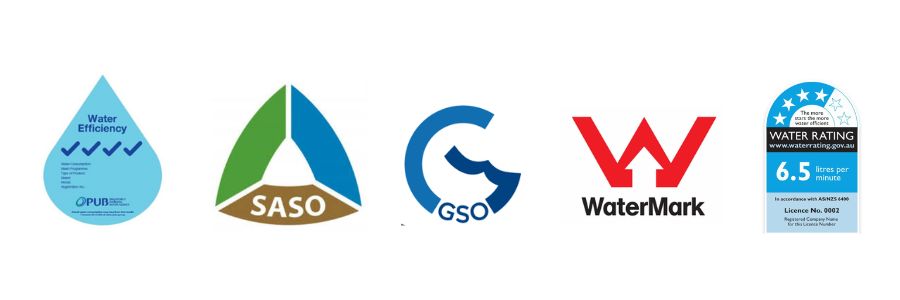
Middle East & Australia
These regions have distinct requirements:
Middle East
- SASO (Saudi Standards, Metrology and Quality Organization): Required for Saudi Arabia
- ESMA: Emirates Authority for Standardization and Metrology
- GSO: Gulf Standardization Organization requirements
Australia & New Zealand
- WaterMark: Mandatory certification for plumbing products
- WELS (Water Efficiency Labeling Scheme): Required water efficiency rating
- AS/NZS Standards: Australia/New Zealand Standards
Certification for these regions typically costs $1,500-4,000 per product and takes 1-3 months.
What Testing Is Required for Specific Bathroom Products?
Different products undergo different tests. Here’s what to expect for the two main sanitary ware categories:
Toilets and Bidets
Toilets undergo the most rigorous testing of all bathroom products:
Performance Testing
- Flush Performance: Testing full and partial flush capabilities
- Waste Extraction: Using standardized media to verify clearing power
- Trap Seal Restoration: Ensuring proper siphoning function
- Wash of Bowl: Evaluating bowl-cleaning effectiveness
- Water Consumption: Precise measurement of water usage per flush
Structural Testing
- Static Load Test: Typically 400-500 pounds for residential models
- Impact Resistance: Testing bowl and tank durability
- Thermal Shock Resistance: Evaluating resistance to temperature changes
Material Testing
- Water Absorption: Checking ceramic density and vitrification
- Chemical Resistance: Testing against common cleaning chemicals
- Surface Finish: Evaluating glaze quality and defects
Specific Tests by Market
- MaP Testing (North America): Maximum performance testing using realistic waste simulation
- Noise Level Testing (Europe/Asia): Measuring flush sound levels
Bathroom Sinks
Bathroom sink testing focuses on these critical areas:
Performance Testing
- Drainage Capacity: Measuring drain rate
- Overflow Function: Testing overflow prevention system
- Water Retention: Checking proper basin design
Structural Testing
- Load Capacity: Static weight testing (particularly for wall-hung models)
- Mount Strength: Testing mounting hardware and attachment points
- Impact Resistance: Drop tests for durability
Material Testing
- Water Absorption: Measuring porosity of ceramic
- Stain Resistance: Testing against common bathroom substances
- Surface Hardness: Evaluating scratch resistance
How Can You Verify Chinese Manufacturer Certifications?
Unfortunately, certification fraud exists. Here’s how to protect yourself:
Red Flags for Fraudulent Certification
Watch for these warning signs:
- Certification documents without unique ID numbers
- Missing expiration dates
- Poor quality logos or formatting errors
- Reluctance to provide verification contacts
- All test results exactly meeting (not exceeding) requirements
Verification Methods
Use these techniques to verify certifications:
- Direct Verification: Contact the certification body directly with the certificate number
- Online Database Checks: Most certification bodies maintain searchable databases
- UPC/cUPC: IAPMO online directory
- WaterSense: EPA partner directory
- CE: No central database (major limitation)
- Third-Party Verification: Professional verification services
- Test Report Analysis: Have experts review actual test reports
Documentation You Should Request
Always ask for these documents:
- Original certification documents (not copies)
- Full test reports (not just certificates)
- Scope documents showing exactly which products are certified
- Certification renewal documentation
When importing from new suppliers, I always verify certifications before placing orders. For guidance on finding reliable suppliers, check my article on How To Find A Reliable Sanitary Ware Supplier In China.
How Should You Plan Your Testing Strategy?
A comprehensive testing strategy includes several components:
Pre-Production vs. Production Testing
Pre-Production Testing:
- Conducted on prototypes or samples before mass production
- Verifies design compliance with standards
- Identifies issues early when changes are less costly
- Typically more extensive than production testing
Production Testing:
- Tests products from actual production runs
- Verifies consistency with approved samples
- Can be performed in-line or on completed products
Most successful importers use both approaches, with comprehensive pre-production testing and targeted production testing.
Sample Size Requirements
The number of samples required varies by test type and standard:
- Initial certification: Typically 3-5 samples per model
- Production monitoring: Statistical sampling (often 1-3% of production)
- Annual recertification: Usually 1-3 samples per model
For statistical validity, larger orders should have more samples tested, regardless of minimum requirements.
For commercial projects with specific requirements, see my guide on Commercial vs. Residential Sanitary Ware.
What Are Your Laboratory Testing Options?
You have several options for where and how to conduct testing:
Testing Locations
Testing in China:
- Advantages: Lower costs, faster turnaround, proximity to manufacturing
- Disadvantages: Potential quality concerns with some labs, acceptance issues in some markets
- Best for: Pre-production testing, initial screening, internal quality control
Testing in Destination Market:
- Advantages: Higher confidence in results, direct knowledge of local requirements
- Disadvantages: Higher costs, longer timeframes, shipping delays
- Best for: Final certification, dispute resolution, market surveillance
International Third-Party Labs with Global Presence:
- Advantages: Consistent protocols worldwide, recognized results, single point of contact
- Disadvantages: Premium pricing, sometimes longer scheduling times
- Best for: Multi-market certification, high-value products, sensitive applications
Reputable Testing Organizations
These organizations are widely recognized for sanitary ware testing:
- Intertek: Global testing with strong China presence
- SGS: Comprehensive testing services worldwide
- UL (Underwriters Laboratories): Especially for North American markets
- TÜV: Particularly strong for European requirements
- IAPMO: Specialized in plumbing product certification
Cost Comparison
Testing costs vary widely depending on location and scope:
| Test Type | China-Based Lab | Destination Market Lab | Global Third-Party Lab |
|---|---|---|---|
| Material Safety | $200-500 | $500-1,200 | $400-900 |
| Performance Testing | $300-800 | $800-2,000 | $600-1,500 |
| Full Certification | $1,000-3,000 | $3,000-8,000 | $2,000-6,000 |
| Production Sample Testing | $100-300 | $300-800 | $200-600 |
For budget-conscious importers, a hybrid approach often makes sense: preliminary testing in China followed by final certification testing with global labs.
How Can You Manage Certification Costs?
Certification can be expensive, but several strategies can optimize costs:
Typical Certification Costs by Product Type
| Product Type | North America | Europe | Asia/Middle East | Global Certification |
|---|---|---|---|---|
| Toilet | $3,000-8,000 | €2,000-5,000 | $1,500-4,000 | $8,000-15,000 |
| Bathroom Sink | $2,000-5,000 | €1,500-3,500 | $1,000-3,000 | $5,000-10,000 |
These costs typically include testing fees, certification processing, and initial documentation.
Cost Reduction Strategies
Try these approaches to manage certification expenses:
Product Family Certification:
- Group similar products under “family certifications”
- Test worst-case configurations that cover multiple models
- Use modular certification for products sharing components
Manufacturer Partnerships:
- Negotiate shared certification costs with manufacturers
- Leverage manufacturer’s existing certifications when possible
Strategic Market Entry:
- Certify for less demanding markets first to generate revenue
- Phase certification expenditures based on market priority
- Start with core product certification before expanding lines
Testing Optimization:
- Conduct preliminary tests before expensive formal testing
- Bundle testing requirements to reduce duplicate testing
- Focus on certification requirements with mutual recognition between markets
For importers developing their own product lines, check my guide on How to Develop Your Own Bathroom Product Line with Chinese Manufacturers for more cost management strategies.
What Are Common Testing Failures and Solutions?
Understanding common testing issues helps you prevent problems:
Frequent Causes of Test Failures
Toilets:
- Insufficient flush performance
- Excessive water consumption
- Inadequate trapway diameter
- Poor water surface area
- Failed load bearing tests
- Incorrect dimensions for rough-in
- Surface defects beyond allowable limits
Bathroom Sinks:
- Inadequate overflow capacity
- Poor drainage performance
- Mounting strength failures
- Surface porosity issues
- Dimensional non-conformity
- Glaze defects exceeding standards
Working with Manufacturers to Resolve Issues
When test failures occur, follow this process:
- Get detailed test failure reports with specific measurements
- Have engineers analyze root causes
- Request design modifications with clear specifications
- Conduct preliminary testing before formal retesting
- Document all changes for future reference
- Verify changes don’t affect other compliance areas
Design and Material Solutions
Common solutions to certification failures include:
For Toilets:
- Redesigning trapway geometry for better flow
- Modifying bowl contours for improved waste removal
- Adjusting water inlet valve positions
- Reinforcing mounting areas for load tests
- Reformulating clay body for greater strength
- Improving glaze application techniques
For Bathroom Sinks:
- Redesigning overflow channels
- Increasing drain diameter
- Enhancing mounting bracket design
- Adjusting firing temperatures for better vitrification
- Modifying basin contours for improved drainage
Re-testing Protocols
After modifications, follow these re-testing best practices:
- Always retest the specific failure areas
- Consider complete retesting for significant changes
- Document the relationship between changes and test improvements
- Implement design changes in all future production
For detailed quality control measures, see my Ultimate Quality Control Guide for Ceramic Bathroom Sanitary Ware.
FAQ:
Q1: How often do certifications need to be renewed?
Most sanitary ware certifications require renewal every 1-5 years, with annual testing being most common. Many certification programs also require periodic factory audits (typically annual) to ensure ongoing compliance. Build a certification calendar with reminders at least 90 days before expiration to prevent lapses. Some markets are beginning to implement “continuous compliance” models requiring more frequent testing.
Q 2: Can I use one certification for multiple markets?
Limited mutual recognition exists between some certification systems. For example, products with UPC certification may have an easier path to Canadian approval, and CE marking is recognized throughout Europe. However, complete “test once, certify everywhere” systems don’t exist for sanitary ware. Work with testing labs experienced in multiple markets to identify overlapping requirements that can be tested simultaneously, reducing duplicate testing.
Q 3: Who is responsible for certification costs – importer or manufacturer?
Responsibility varies based on your supplier relationship and negotiating leverage. Established manufacturers often have existing certifications for standard products and include these costs in pricing. For customized products, certification costs are typically negotiable, with larger orders giving importers more leverage. Always clarify certification responsibility in writing before placing orders, as assumptions can lead to costly surprises later.
Q 4: What happens if products fail inspection at customs?
Customs rejection due to certification issues can be devastating. Products may be held, returned, or even destroyed. Remediation options include: providing missing documentation (if it’s just a paperwork issue), obtaining emergency testing for minor compliance issues, rerouting to markets with less stringent requirements, or returning products to the manufacturer. Prevention through pre-shipment verification is far less costly than remediation after customs problems.
Q 5: How do changes to products affect existing certifications?
Even minor product modifications can invalidate certifications. Generally, cosmetic changes (like color) have minimal impact, while any changes affecting performance, dimensions, materials, or structural elements require recertification. Some certification programs have “engineering review” processes for minor changes that are less costly than full retesting. Always notify certification bodies of any product changes, as unauthorized modifications can result in certification revocation.
Q 6: What’s the fastest way to obtain necessary certifications?
For urgent certification needs, consider these acceleration strategies: work with labs offering expedited services (typically at premium pricing), leverage manufacturer’s existing test reports as a starting point, use preliminary testing to identify issues before formal submission, apply for simplified testing if previous similar products were certified, and consider conditional certifications available in some markets. Express services can reduce timelines by 30-50%, but expect to pay 50-100% premium for rush processing.
Conclusion
Product certification might seem like a bureaucratic hurdle, but it’s actually a valuable business asset. Properly certified products:
- Demonstrate your commitment to quality and compliance
- Provide legal protection against liability claims
- Open doors to regulated markets and commercial projects
- Build customer confidence in your brand
- Create barriers against less professional competitors
The key to certification success is planning ahead. Start researching requirements long before you need the certification, build testing into your product development timeline, and establish clear certification responsibilities with your suppliers.
For importers new to certification, start small. Focus on core products and primary markets first, then expand your certification portfolio as your business grows. Work with experienced testing partners who can guide you through the complex world of standards and requirements.
Remember that certification is not just about passing tests—it’s about ensuring your products are safe, functional, and compliant with the markets you serve. The investment you make in proper certification will pay dividends in customer satisfaction, regulatory compliance, and business growth.
Have questions about certification for a specific product or market? Drop a comment below or contact me directly for personalized guidance based on your importing needs.
This article was last updated in April 2025 based on current certification requirements and testing protocols.