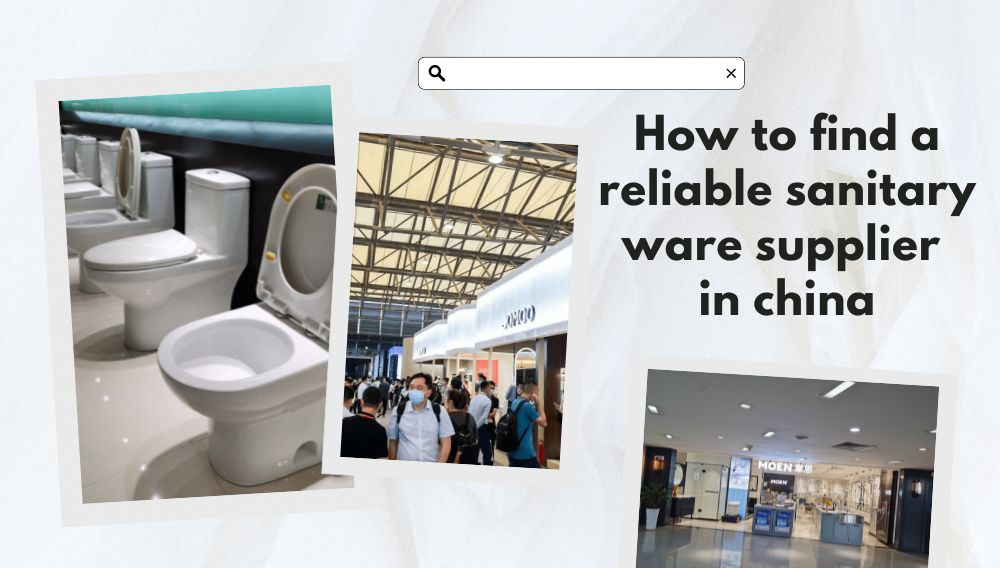
Choosing a reliable sanitary ware supplier in China can be quite challenging. This article will provide useful information on how to find a reputable and trustworthy provider.
If you’re sourcing sanitary ware from China, focus on these 5 key factors:
Verify if the supplier is a legal company
Check certifications for spcific market entry(CUPC, CE, WaterMark, Saber, NOM etc)
Evaluate MOQ flexibility and production capability
Assess quality consistency, not just samples
Test communication speed and professionalism
A reliable supplier is not defined by price — but by consistency, compliance, and long-term reliability.
Who This Guide Is For
This guide is designed for:
Importers & distributors: building long-term supply chains
Project contractors: sourcing complete bathroom solutions with stable quality
Private label brands: looking for OEM manufacturers
If your goal is to avoid costly mistakes, reduce sourcing risk, and find stable partners — this guide will help you.
Why Finding a Reliable Supplier in China Is Not Easy
China is the world’s largest sanitary ware production base, especially in regions like Foshan & Chaozhou. However, the challenge is not finding suppliers — it’s identifying reliable ones.
Common issues buyers face:
- Inconsistent product quality between orders
- Missing or invalid certifications
- Poor communication and delayed responses
- Hidden outsourcing (trading companies acting as factories)
👉 The real challenge is not sourcing — it’s risk control.
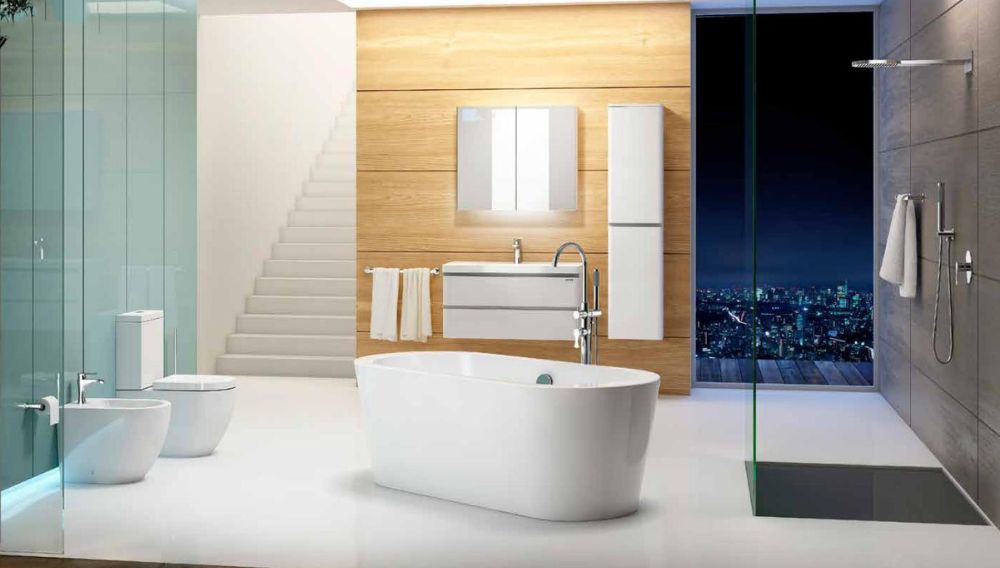
Where to Find Sanitary Ware Suppliers in China
Choosing the right sourcing channel can significantly impact your efficiency and risk level.
1. B2B Platforms (Best for Initial Research)
Best for:
- New importers
- Quick supplier comparison
Advantages:
- Large supplier database
- Easy RFQ process
- Lower costs than offline tradeshow or visit china
Limitations:
- Many trading companies
- Quality varies widely, hard to identify the reliablity
👉 Insight: Use platforms to discover suppliers, not to finalize decisions.
2. Google Search (Best for Finding Real Factories or experient supplier)
Best for:
- Experienced buyers
- long-term cooperated importer / distributors
Advantages:
- Higher chance of finding direct manufacturers
- More chance to find experient supplier without tradeshow
Limitations:
- Requires filtering skills
- Time-consuming
👉 Try search terms like:
“sanitary ware manufacturer China”
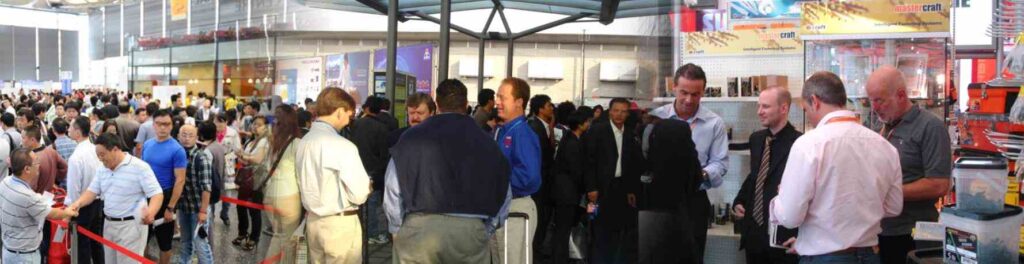
3. Trade Shows (Best for Serious Buyers)
Best for:
- Distributors / OEM / private label brands
- Large-volume buyers / wholesalers
Advantages:
- Face-to-face communication
- Direct product inspection
Limitations:
- Time and travel cost
- Limited verification depth
👉 Insight: Trade shows build trust — but still require follow-up verification.
4. Sourcing Agents (Best for Efficiency)
Best for:
- Project buyers
- Buyers new to China
Advantages:
- Local expertise
- Saves time
Limitations:
- Additional cost
- Quality depends on agent
5. Wholesale Markets in Manufacturing Hubs (Best for On-the-Ground Sourcing)
Visiting wholesale markets in major manufacturing hubs like Foshan offers a unique sourcing advantage that online platforms cannot provide.
These markets bring together hundreds of sanitary ware suppliers in one place — allowing buyers to compare products, quality, and pricing efficiently.
Best for:
- Buyers visiting China in person
- Importers looking for new product ideas
- Buyers who want to compare multiple suppliers quickly
Advantages:
- High efficiency comparison
- View hundreds of designs, finishes, and price ranges within a single day
- Direct product inspection
- Check material, finishing, and build quality in real life
- Faster supplier discovery
- Identify potential factories or brands much quicker than online search
Limitations:
- Many showrooms are sales offices, not actual factories
- Product appearance ≠ production capability
- Prices shown may not reflect export conditions
Major Sanitary Ware Wholesale Markets in Foshan
If you plan to visit Foshan, these are some of the most well-known sanitary ware markets: China ceramic city, Shiwan Sanitary Ware Center, and Casa Ceramics & Sanitary Ware Mall
China Ceramic City
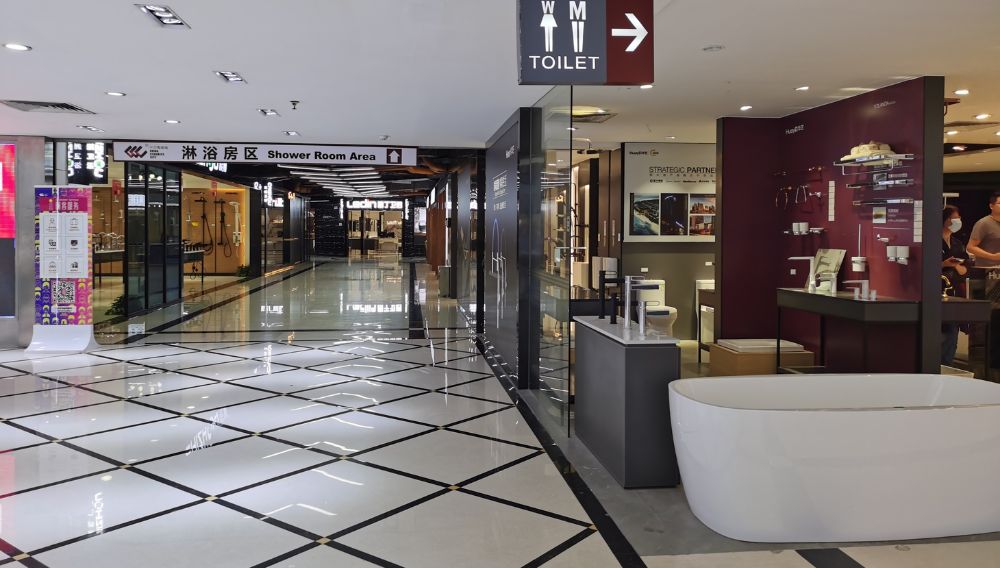
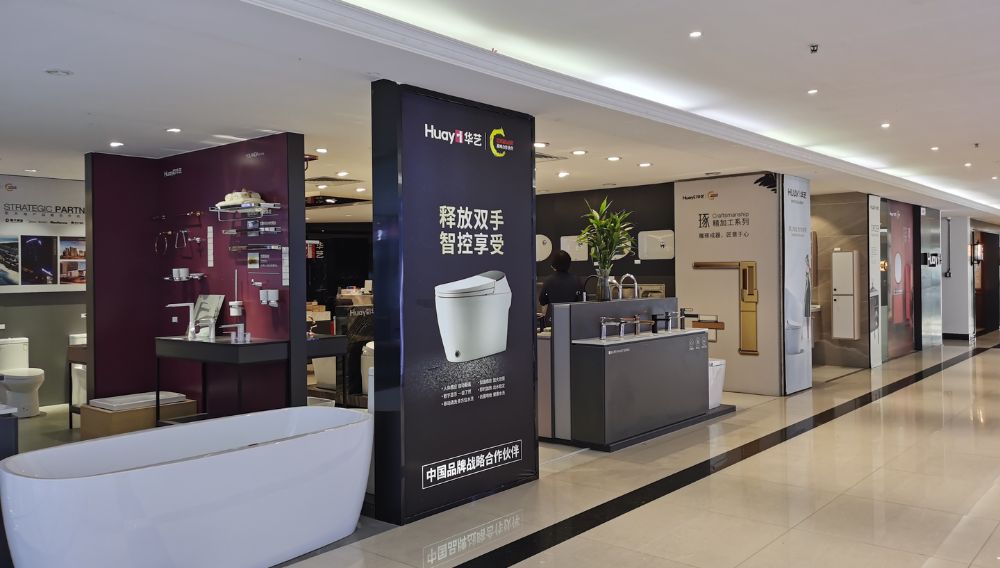
China Ceramic City is a wholesale building material market with many years of history in Foshan. It is a five-story building with an area of 130 000 square meters and the main building area of 53 000 square meters. Porcelain tiles, ceramic tiles, ceramic sanitary ware, leisure bathrooms, shower room products, bathroom accessories and sanitary fittings are all included.

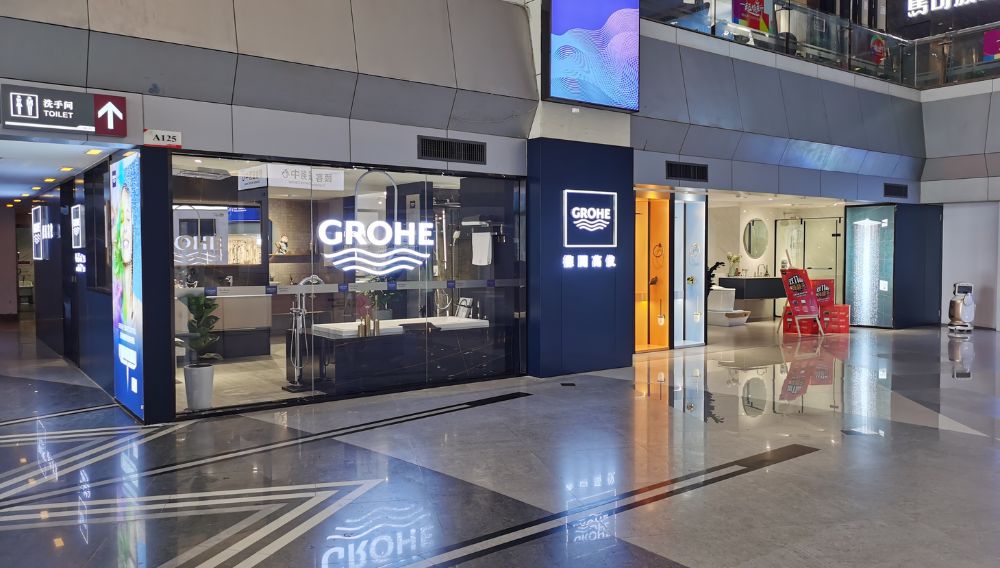
On the first floor and the fourth floor are sanitary ware products and on the second, third and fifth floors are ceramic tile and mosaic products. In China Ceramic City, it gathers more than 200 famous sanitary ware brands at home and abroad. Grohe, TOTO, Kholer, Hegii, SSWW, Huayi and CAE, etc. All have a showroom in China Ceramic City. If you want to buy high quality bathroom products, this is the place for you.
Every April and October, the Foshan Ceramic Fair is held in China Ceramic City, which attracts overseas buyers and distributors from all over China to participate.
Address: No. 2, Jiangwan third road, Chancheng district, Foshan, Guangdong province, China
Opening hours: 8:30am – 6:00 pm.
Shiwan Sanitary Ware Center
Shiwan sanitary ware center is about 300 meters away from China Ceramic City, with a construction area of about 10,000 square meters. Products including bathroom fixtures, mirrors, shower rooms, wall cabinets, bathroom accessories and so on, quality are mainly from middle-grade.
Address: 100 meters west of the intersection of Jiangwan 2nd Road and Qingke Street, Foshan City, Guangdong Province
Opening hours: 8:30am – 6:30 pm.

Casa Ceramics & Sanitarywares Mall
Casa Ceramics & Sanitarywares Mall is a comprehensive trade and wholesale base for ceramic tile, porcelain tile, toilet, bathroom basin, bathtub, shower room, leisure bathroom products, and other bathroom fittings. It has a construction area of nearly 100,000 square meters. There are two special areas for sanitary ware and ceramic tiles in the mall. Currently, more than 230 well-known brands of sanitary ware and ceramic tiles have settled here, and 85% of them have established their own marketing stores directly. These brands include Moen, Ego, SSWW, Huida, Arrow, Hegii, Anhua, etc.
Address: Blk 1st, Jihua 4th Road, Chancheng District, Foshan City, Guangdong Province
Opening hours: 8:30 am – 6:00 pm.

By visiting these sanitary ware wholesale markets, you will have a much better understanding of the product quality and company situation. But it doesn’t mean all the suppliers you find are reliable.
And acturally there is no single “best” sourcing channel.
If you want to know more sanitary ware brands in China and quality control guides, read our post: The Ultimate Guide to Chinese Sanitary Ware Brands for Importers.
B2B platforms help you discover suppliers, trade shows help you build trust, and direct sourcing helps you build long-term partnerships.
The key is not where you find suppliers — but how you evaluate them.
How to Identify a Reliable Sanitary Ware Supplier (Step-by-Step)
Identifying a reliable sanitary ware supplier in China comes down to seven verifiable criteria: legal registration, product certifications, sample quality, factory audit results, pricing structure, communication professionalism, and export experience. Whether you are sourcing for a large real estate project or building a long-term import business, following this step-by-step process will significantly reduce the risk of working with the wrong supplier.
Step 1: Verify Legal Registration and Business Credentials
The first step in evaluating any sanitary ware supplier in China is to confirm that the company legally exists and is authorized.
A legitimate Chinese supplier should be able to provide the following documents without hesitation:
Business License: Check the registered company name, registration date, registered capital, and business scope. A company registered for less than 1–2 years with very low registered capital warrants extra caution. ( need you to know chinese)
You can also cross-check a supplier’s registration details through China’s National Enterprise Credit Information Publicity System (www.gsxt.gov.cn). Simply enter the company name or registration number to verify their legal status, business scope, and whether any administrative penalties have been recorded.
Red flag: If a supplier is reluctant to share their business license or provides documents with inconsistencies in the company name, treat this as a serious warning sign.
Step 2: Check Product Certifications for Your Target Market
A reliable sanitary ware supplier in China will hold the relevant product certifications required by your destination market. Certifications are not just paperwork — it determine whether your products can legally enter your market, and prove that products have been independently tested to meet safety, performance, and dimensional standards.
The required certifications vary by market. Use the table below as a reference:
| Target Market | Key Certifications to Request |
| USA / Canada | CUPC (cUPC), ASME A112 standards |
| Europe (EU) | CE Marking, EN standards (e.g. EN 997 for toilets) |
| Australia / New Zealand | Watermark |
| Singapore | Mandatory Water Efficiency Labelling Scheme (MWELS) by PUB |
| Middle East | SASO (Saudi Arabia), GSO standards |
Most certification bodies provide an online lookup tool — for example, IAPMO (the body behind CUPC) allows certificate verification at their official website. Ask the supplier for the certificate number and check it yourself.
Important note: A supplier may show you certificates that belong to a different factory or a different product model. Always confirm that the certificate matches the specific product and factory you are sourcing from.
Want to understand product certifications more clearly? Read our guide: Product Testing and Certification Guide for Sanitary Ware Importers.
Step 3: Conduct a Factory Audit (or Use a Third-Party Inspection Service)
Visiting the factory in person — or commissioning a third-party audit — is one of the most reliable ways to verify whether a sanitary ware supplier in China can consistently deliver what they promise. Many quality problems in international orders stem not from dishonest suppliers, but from suppliers whose production systems are too weak to maintain consistency at scale.
A thorough factory audit for sanitary ware should cover five core areas:
- Production capacity and equipment: Assess whether the factory’s kiln size, casting capacity, and workforce are sufficient for your expected order volume. A factory producing 1,000 toilets per month cannot reliably handle a 10,000-unit order without quality trade-offs.
- Quality control process: Ask to see the QC inspection points on the production line. Is there incoming material inspection? In-process inspection? Final inspection before shipment?
- Warehouse and storage conditions: Check how finished products are stored. Ceramics stacked improperly or stored in damp conditions the package will get soft very soon, it will compromising the protective function of the cartons.
- Worker skill and management: Observe the factory floor. Are QC checkpoints visibly posted? Do workers follow consistent procedures? Management culture on the factory floor directly affects product consistency.
If you cannot travel to China, the following third-party inspection agencies offer pre-shipment inspection, factory audit, and AQL-based quality control services:
- SGS (global leader in inspection and testing)
- Bureau Veritas (BV)
- Intertek
- QIMA (popular for SME importers sourcing from China)
At Seletti, we conduct strict audits of each of our partner factories and perform AQL-standard inspection on every batch before shipment, which allows us to provide a 1–5 year warranty on sanitary ware products.
Step 4: Request and Evaluate Product Samples
Requesting samples is a standard step in sourcing sanitary ware from China, but many buyers treat it too casually. A sample is not just a product preview — it is a test of the supplier’s operational standards, attention to detail, and commitment to quality before a contract is signed.
When requesting samples, be specific. Provide the exact model number, color (glaze finish), and any dimensional requirements. A supplier who pushes back on sample specifications or sends a different model than requested without explanation is showing you how they will handle your actual order.
Once the sample arrives, evaluate it across these five dimensions:
- Glaze quality: The surface should be uniformly smooth with no pinholes, cracks, or uneven color. Run your hand across the surface — rough patches indicate inconsistent kiln firing.
- Dimensional accuracy: Use a tape measure and compare against the supplier’s technical drawing. Because ceramics dimension can change after firing, the dimention should be in a tolerrance.
- Water absorption rate: For ceramic sanitary ware, the water absorption rate should be below 0.5% (vitreous china standard).
- Packaging quality: Is the product wrapped with sufficient foam protection? Are corners reinforced? Poor packaging reveals indifference to breakage risk during shipping.
- Response time and documentation: How quickly did the supplier ship the sample? Did they proactively provide a sample report or technical datasheet? Speed and completeness here reflect their operational competence.
After 15 years of experience sourcing ceramic products from China, I have found that the quality gap between a rushed sample and a carefully prepared one tells you everything about how a supplier manages your orders.
Step 5: Evaluate Pricing Structure and Payment Terms (Red Flags to Watch)
Price is an important factor when sourcing sanitary ware from China, but abnormally low prices are often a sign of hidden quality compromises. Understanding how to read a price and negotiate terms is an essential part of identifying a reliable supplier.
Understanding price tiers:
Ceramic sanitary ware prices from China generally fall into three tiers based on raw material grade, kiln technology, and QC rigor. A toilet that appears visually identical to a premium model but is priced 40–50% lower is almost certainly using lower-grade clay body, thinner glaze, or skipping critical inspection steps. The savings at purchase often become losses through returns, complaints, and warranty claims.
Red flags in pricing:
- A supplier who immediately agrees to your target price without any negotiation or discussion of specifications is a warning sign — it suggests they will cut corners to meet the price, not the other way around.
- Watch for vague pricing that changes after samples are approved — a professional supplier provides itemized FOB pricing broken down by product, packaging, and any customization fees.
Standard payment terms for China sanitary ware:
he most common payment structure is 30% T/T deposit before production + 70% T/T balance before shipment or against copy of B/L (Bill of Lading). For larger orders or new suppliers, consider Letter of Credit (L/C at sight) for greater protection.
Negotiation checklist — confirm the following before signing any purchase agreement:
- MOQ per item and per container
- Lead time
- Warranty period
- Packaging specification
Step 6: Test Communication & Professionalism
Communication quality is one of the most telling — and most overlooked — indicators of a reliable sanitary ware supplier in China. How a supplier communicates before the order reflects exactly how they will handle problems after.
Response time as a baseline standard:
A professional supplier should respond to your initial inquiry within 24 hours on business days. If you are regularly waiting 48–72 hours for basic replies during the pre-order stage, expect worse responsiveness once your payment has been made and production has started.
What to evaluate beyond response speed:
- Clarity and specificity: Does the supplier answer your actual questions, or do they respond with generic templates? A supplier who gives precise technical answers (dimensions, glaze specifications, firing temperature, compliance standards) is demonstrably more knowledgeable than one who sends only catalog PDFs.
- Proactive communication: Does the supplier flag potential issues before you discover them? For example, do they inform you if a requested color is being discontinued, or if a shipment might be delayed due to factory scheduling? Proactive communication is a hallmark of a well-run operation.
- Language professionalism: While perfect English is not a requirement, consistently unclear or ambiguous written communication creates real risks in purchase orders, specifications, and contracts.
- Problem-solving orientation: Present a hypothetical challenge — for example, ask how they would handle a situation where 5% of products arrive cracked. A reliable supplier will describe their claim process clearly: photographic evidence submission, credit note or replacement shipment timeline, and who covers return freight. A weak supplier will become evasive or defensive.
After-sales professionalism:
Ask the supplier directly: what is your warranty policy, and how do you handle post-shipment defect claims? A confident, specific answer — for example, “We provide a 2-year warranty; defective items confirmed by photo evidence within 30 days of arrival are replaced in the next shipment at no charge” — signals that they have a documented process and stand behind their products.
Step 7: Check Export Experience & Market Understanding
The final — and often underestimated — criterion for identifying a reliable sanitary ware supplier in China is their depth of export experience and familiarity with your specific market.
Why export experience matters:
International sanitary ware orders involve far more than manufacturing. A supplier with genuine export experience will understand: how to prepare a complete set of shipping documents (commercial invoice, packing list, bill of lading, certificate of origin); how to consolidate and containerize fragile ceramic products safely; how to coordinate with freight forwarders; and how to resolve customs issues when they arise. A supplier without this experience creates logistics problems that fall on the importer to resolve.
Market-specific knowledge as a trust indicator:
Beyond logistics, a supplier who understands your market brings real commercial value. Do they know which toilet flushing standards are required in your country? Are they aware of current design trends in your market — for example, the shift toward rimless pan designs in Europe, or the preference for elongated bowls in North America? Suppliers with genuine market knowledge are far better partners for product development, private labeling, and long-term supply relationships.
When evaluating a new sanitary ware supplier in China, choose a supplier with rich experience and market understanding will lead you ahead.
Common Mistakes Buyers Make
- Choosing based on price only
- Ignoring certification verification
- Not validating factory capability
- Skipping quality control checks
FAQ
Q1: How do I know if a supplier is a real factory?
Ask for factory videos, production details, and business license.
If they can’t clearly show production capability, they are likely a trading company.
Q2: How do I avoid quality issues in bulk orders?
Don’t rely on samples — check the supplier’s quality control system and past production consistency.
Q3: Is visiting China necessary?
Not required, but very helpful.
Visiting places like Foshan lets you compare suppliers much faster.
Q4. What defines a reliable supplier long-term?
Not price only — but consistent quality, clear communication, and problem-solving ability.
Conclusion
Finding a reliable sanitary ware supplier in China can be both a time-consuming and difficult task, but there are ways to make it easier. Whether you choose to use online platforms or visit exhibitions and wholesale markets, it is critical to do your research and comparison and negotiation. This will ensure you are working with a reputable supplier.
If you are exploring a reliable sanitary ware supplier from China, feel free to reach out. We will help you import bathroom products from China with easier and simply.
Happy sourcing!