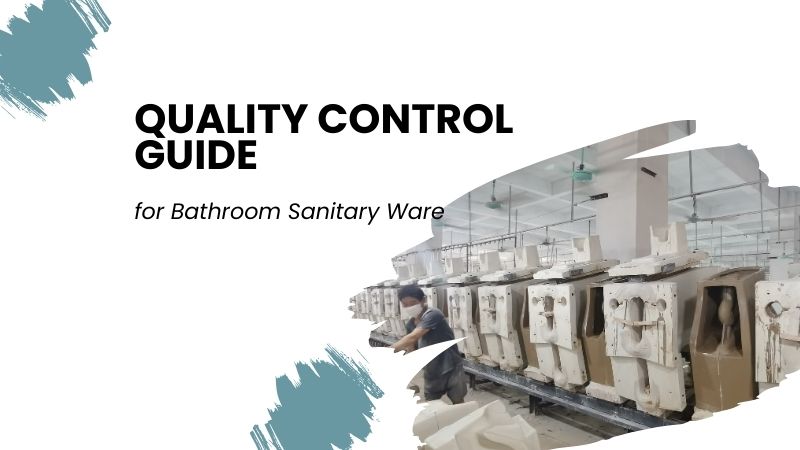
Quality control in ceramic bathroom sanitary ware represents the cornerstone of delivering reliable, long-lasting products to the market.
Let me share my experience as a supplier to walk you through the key parameters and operational procedures of quality control, ensuring every sink and toilet meets international standards.
Common Defects in Ceramic Sanitary Ware
Sanitary ware products can face several common quality issues that may not be immediately visible during sampling but become apparent in bulk production or after installation. These issues often lead to customer complaints, returns, or project delays if not properly controlled.
Typical problems include surface defects such as uneven glaze, pinholes, or color inconsistency, as well as structural issues like dimensional deviations or poor fitting. In some cases, samples appear acceptable, but mass production shows variations in quality. Functional problems, such as weak flushing performance in toilets, can also occur if internal structure design, glazing and fitting components or are not properly controlled.
Understanding these issues is the first step to implementing effective quality control measures.
Key Quality Control Parameters For Ceramic Bathroom Sanitary Ware
Before diving into the detailed processes, it’s important to understand the fundamental parameters that define quality in ceramic bathroom sanitary ware, it mainly including these 5 key parameter: water absorption, surface quality, glazed crazing resistance, loading strength and flush performance. Manufacturers assess these key aspects throughout production:
| Quality Parameter | Testing Method | Acceptance Criteria | Impact On Product |
| Water Absorption Rate | 24-hour immersion test | ≤0.5% for vitreous china | Affects durability and hygiene |
| Surface Quality | Visual inspection + gloss meter | No visible defects at 60cm distance | Determines aesthetic appeal |
| Loading Strength | Static load test | 400kgs for toilets, 150kgs for wall-hung basins | Ensures safety and longevity |
| Glaze Crazing Resistance | Autoclave pressure test | No crazingafter 1-hour exposure | Prevents long-term deterioration |
| Flush Performance | Media discharge test | Complete evacuation in single flush | Ensures functional efficiency |
Surface Quality:
Ceramic products must show no visible defects when viewed from one meter under normal lighting conditions. This requirement ensures both aesthetic appeal and cleaning efficiency.
Moreover, surface quality testing goes beyond simple visual inspection. Using specialized equipment, quality teams measure gloss levels, surface smoothness.
Structural Integrity:
Toilets must withstand a minimum load capacity of 400kg, while wall-hung sinks have specific load requirements based on their design. This testing ensures long-term safety and durability in daily use.
Water Absorption:
For vitreous china, water absorption must not exceed 0.5%. This strict requirement helps ensure product longevity and maintains proper hygiene standards. Manufacturers verify this through standardized 24-hour immersion testing.
For more insights on sourcing for commercial projects, and want to know the quality tiers of the products, watch for my upcoming article on Commercial vs. Residential sanitary ware: sourcing guide for project contractors, and Price vs. Quality: understanding the different tiers of Chinese bathroom products, which will dive deeper into project-specific requirements.
What’s The Key Quality Control Process In Ceramic Sanitary Ware Product Manufacturing?
This section covers the quality control process our manufacturing partners follow, structured around four key stages: Raw Material Inspection, Pre-production Sample Approval, In-Process Quality Control, and Final Product Inspection & Testing. Let me walk you through how ceramic sanitary ware manufacturers maintain quality at each of these critical stages.
Raw Material Selection and Inspection
The journey of quality bathroom sanitary ware begins with careful raw material selection. Manufacturing facilities focus intensively on this initial stage because raw material quality directly affects the final performance of sanitary ware products. Key inspection points include: clay body quality, plasticity, particle size distribution, and the glazing materials.
Raw Material Selection and Inspection Table:
| Aspect | What is checked | Why it matter |
| clay body quality | Composition and material consistency | Determines overall strength and durability |
| clay’s plasticity | Ability of clay to be shaped | Ability of clay to be shaped |
| particle size distribution | Uniformity and size of particles | Impacts product strength and long-term durability |
| glazing materials | Surface material quality and stability | Affects finish, appearance, and defect resistance |
Quality inspectors at manufacturers carefully examine the clay body composition and glazing materials, checking not just its basic properties but also how it will perform throughout the production process, much like a chef inspecting ingredients before creating a complex dish.
Think of the clay body as the foundation of a building – just as a strong foundation ensures a stable structure, high-quality clay materials ensure durable fixtures.
Manufacturers test the clay’s plasticity, which determines how well it can be shaped into complex designs like toilets and sinks. They also analyze particle size distribution, which plays a crucial role in the final product’s strength and durability.
Pre-production Sample Approval
Before committing to mass production, manufacturers create multiple sample products for thorough evaluation. This critical stage serves as a dress rehearsal for full production, allowing quality teams to identify and address potential issues before they affect large-scale manufacturing.
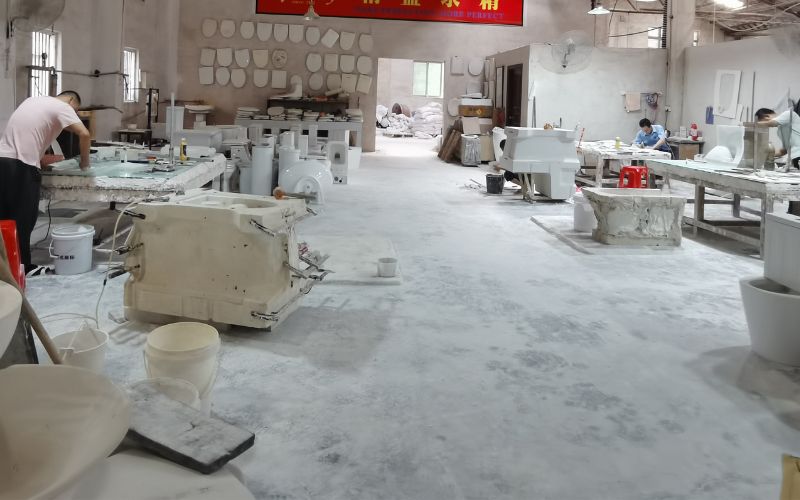
They typically produce several test pieces under standard production conditions, testing not just the product design but also the production process itself.
During sample evaluation, quality inspectors examine both aesthetic and functional aspects. They verify dimensions using precise measuring equipment, assess surface quality under standardized lighting, and perform rigorous functional testing.
For toilets, this includes evaluating flush patterns and water efficiency. For sinks, they examine drainage characteristics and mounting stability. This comprehensive evaluation often reveals necessary adjustments that might not be apparent in technical drawings alone.
If you need to customize the products you want according to your requirements, usually at this stage the factory will make a few samples for you to confirm that there are no problems before formally starting mass production.
Sample Approval Checklist
Before mass production, sample approval is a critical step to verify both product design and production feasibility.
| Stage | What it done | What it checked | Why it matters |
| Sample Production | Produce multiple samples under real conditions | Consistency with actual production process | Ensures samples reflect real production quality |
| Design Verification | Compare samples looks with specifications | Compare samples with specifications | Prevents mismatch with drawings |
| Surface Inspection | check appearance quality | Glaze finish, color consistency, visible defects | Ensures appearance meets quality standards |
| Functional Testing | Test product performance | Toilets: flush performance & water efficiency Sinks: drainage & stability | Confirms usability and performance |
| Process Evaluation | Review production feasibility | Stability of production process | Avoids issues during mass production |
| Adjustment & Approval | Modify and confirm final sample | Final approval before production | Reduces risk of bulk defects |
| Customization Check | Confirm customized samples with buyer | Design, specification, and requirements alignment | Ensures buyer requirements are fully met |
Tip: If you have customize products, always request pre-production samples and confirm all specifications before approving mass production.
In-Process Quality Control
Quality control continues throughout the production process, with sanitary ware manufacturers maintaining specific checkpoints at each crucial stage. Let me walk you through these key inspection points and explain why each matters for the final product quality.
The Forming Stage
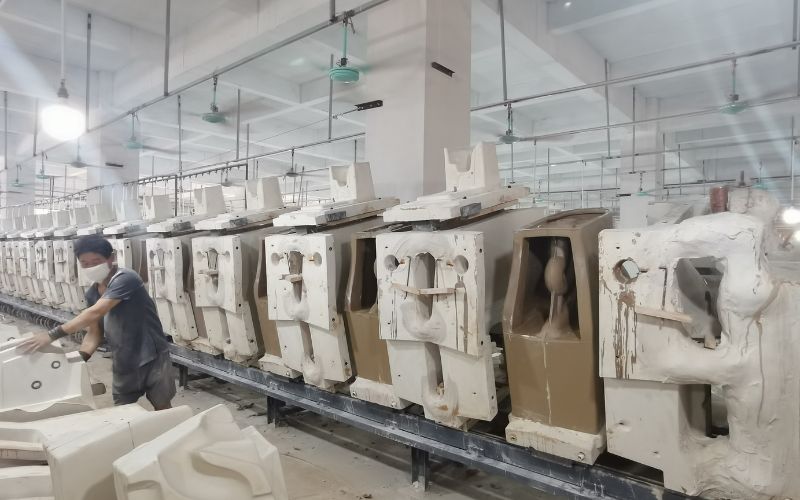
The forming stage requires careful monitoring of how the ceramic material takes shape. This stage is particularly critical because it establishes the basic structure of each plumbing fixture. Manufacturing quality teams check wall thickness consistency in sinks and toilets, they pay special attention to critical functional areas, such as flush channels in toilets or drainage paths in sinks, where precise shaping directly affects performance.
The Drying and Modification Process
The drying stage might seem straightforward, but it requires careful control of environmental conditions. Much like drying delicate fabric, ceramic pieces must dry evenly to prevent warping or cracking. Manufacturers maintain strict control over temperature and humidity levels throughout this process.
Quality inspectors regularly check pieces for any signs of defects that might develop during drying, such as warping or early crack formation. They understand that proper drying directly influences not just the immediate quality but also the long-term durability of the final product.
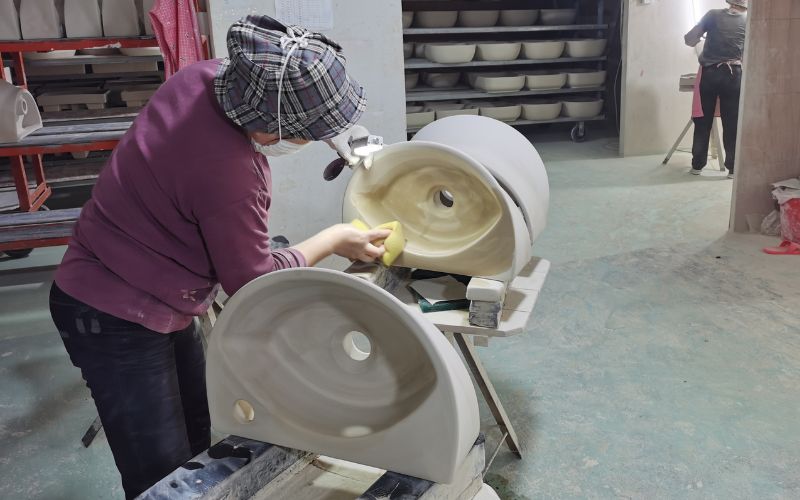
At the same time, after drying, there will be a professional worker to conduct a second inspection and modification of the ceramic body to ensure that the surface is flat and smooth enough. For factories with good quality control and general factories, some differences can be seen or felt on the surface of the products.
Glazing Quality Control
The glazing process requires an artist’s attention to detail combined with scientific precision.
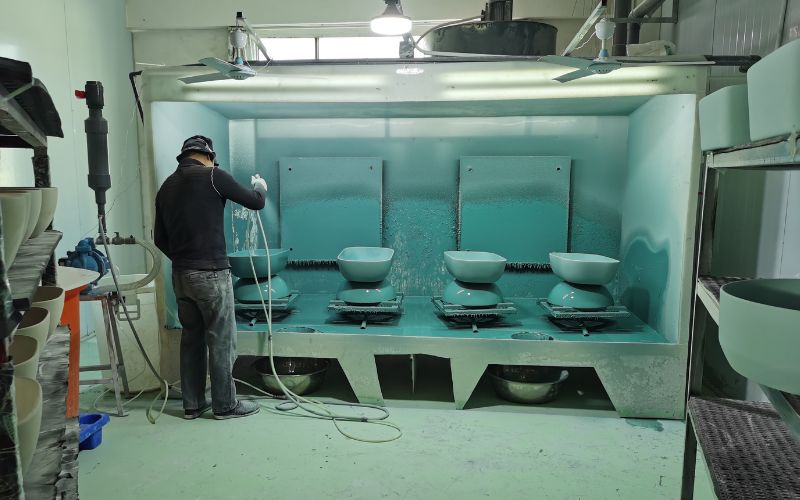
Quality inspectors check for even coverage, proper thickness, and surface consistency. They look specifically for common defects like pinholes (tiny holes in the glaze), crawling (where glaze pulls away from certain areas), or blistering (bubble-like imperfections in the surface).
Think of glaze as both the protective skin and the aesthetic finish of the product – it must be both beautiful and functional.
The Critical Firing Stage
Firing represents a crucial transformation point where clay becomes ceramic. During this stage, sanitary ware manufacturers monitor temperature conditions throughout the kiln with the precision of a master baker.
The firing process must follow exact temperature curves – too hot and pieces may warp, too cool and they won’t achieve proper strength.
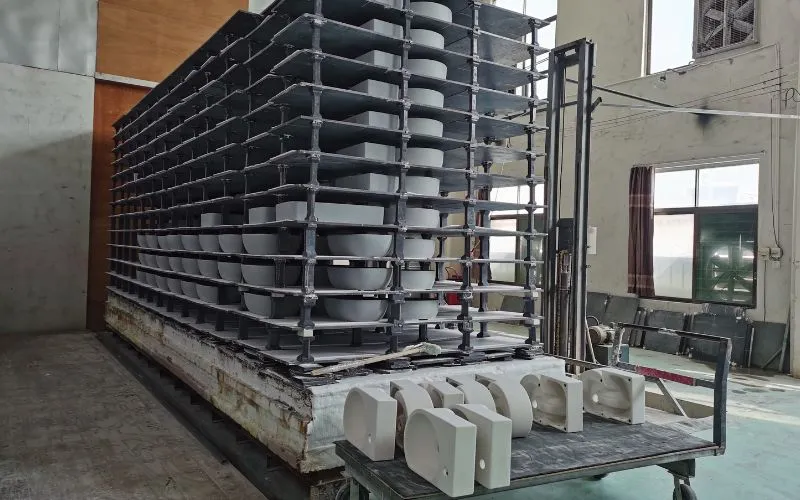
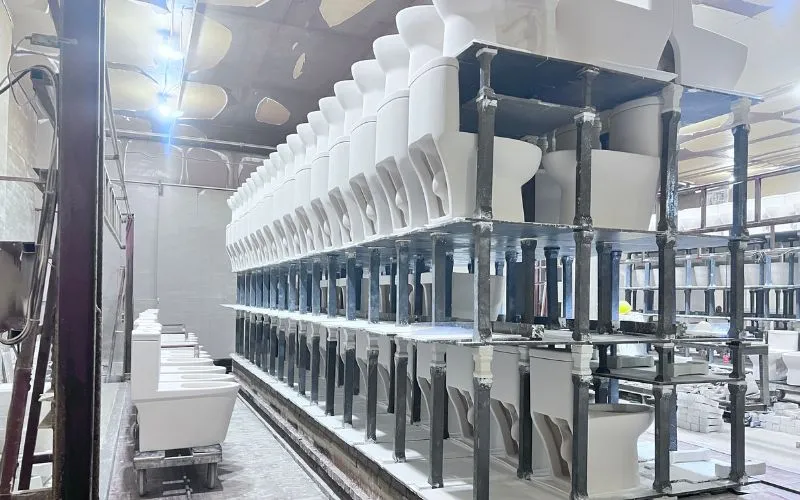
Quality inspectors look for signs of proper vitrification, the process that gives ceramic its characteristic strength and durability. This stage transforms a shaped piece of clay into a lasting fixture that can withstand years of daily use.
Final Product Inspection and Testing
Final inspection is the last quality checkpoint before sanitary ware products are shipped. At this stage, manufacturers verify product performance, structural integrity, and packaging to ensure goods meet required standards.
Inspection standards may vary between manufacturers. Some trading companies also conduct additional inspections or random checks based on customer requirements.
Key tests include physical property testing, surface quality inspection, functional performance evaluation, and packaging inspection.These checks help ensure that products are durable, functional, and protected during transportation.
Final Inspection Checklist
| Inspection Aspects | What is Checked | Key Method / Standard | Why it matters |
| Surface Quality (Glazing) | Surface finish, defects, gloss consistency | Visual inspection under standard lighting + gloss meter | Ensures appearance consistency and defect-free surface |
| Water absorption | Ceramic density and vitrification | ≤ 0.5% absorption after 24h water test | Indicates durability and resistance to staining |
| Load-bearing Capacity | Structural strength | Toilets tested ≥ 400kg load | Ensures safety and long-term durability |
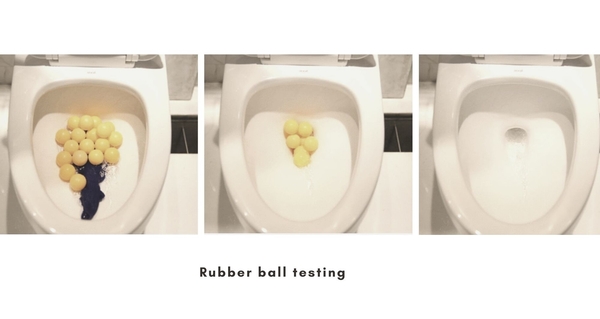
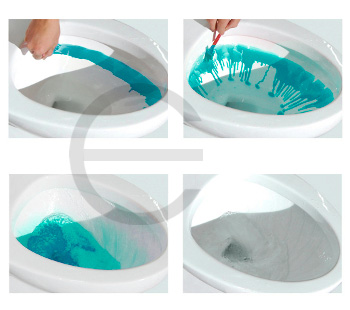
| Flush Performance | Toilet functionality | Flush efficiency, bowl cleaning, trapway flow | Verifies usability and water efficiency |
| Drainage Performance | Sink functionality | Drainage speed and stability | Prevents water retention and installation issues |
| Packaging Quality | Protection during transport | Cushioning, edge protection, secure packing | Prevents damage during shipping |
| Loading & Handling | Container loading method | Weight distribution, stacking pattern | Ensures products arrive without damage |
Tips: The above checkpoints are based on our experience working with factories and real customer feedback. We hope they help you avoid common mistakes caused by overlooked details.
Want to know more guides on toilet quality checking? Visit our post: How to evaluate toilet quality as an importer or distributor to get more details.
Why Certifications Matter in Sanitary Ware Quality Control?
Certifications are an important part of quality control in sanitary ware production. They not only ensure compliance with market regulations, but also reflect whether a product meets specific performance and safety standards.
Different markets require different certifications. For example, cUPC is required for North America, WaterMark and WELS for Australia, Mandatory Water Efficiency Labelling Scheme for Singapore, SABER for Saudi Arabia, and NOM for Mexico. These certifications verify aspects such as water efficiency, safety, and product performance.
From a sourcing perspective, certifications also indicate whether a supplier is capable of meeting international standards. Buyers should always verify certification scope and validity, as not all factories are qualified for export to every market.
| Certification | Region | Purpose |
| ISO | Global | Quality management |
| CE | Europe | Safety compliance & environmental protection |
| cUPC | USA / Canada | Plumbing standards |
| WaterSense | USA | Water saving |
| WaterMark | Australia/ New Zealand | product quality and safety approval |
| WELS | Australia/ New Zealand | Water efficiency |
| MWELS | Singapore | Water efficiency |
| SABER | Saudi Arabia | Import compliance |
| NOM | Mexico | Safety & Mexican national standards |
If you want to know more information about the bathroom products’ certification, see our previous post: Product testing and certification guide for sanitary ware importers.
And if you want to know the top 10 chinese sanitary ware brands and the main bathroom manufacturing areas in China, read the post The ultimate guide to Chinese sanitary ware brands for importers, you will have a more clear understanding in this field.
Practical Quality Verification Guidelines
Understanding how to verify product quality becomes essential for anyone involved in the bathroom sanitary ware supply chain. While manufacturers handle detailed testing, distributors and buyers should know key quality effectively in practical situations.
- Visual assessment
serves as the first line of quality verification. When examining ceramic sanitary ware, proper lighting proves crucial. Natural daylight or bright, even artificial lighting helps reveal surface variations that might indicate quality issues. Examine products from various angles, as certain defects become visible only from specific viewpoints. Pay particular attention to curved surfaces and joints, where manufacturing challenges often manifest as visible imperfections.
- Functional verification
requires a systematic approach to testing basic operations. For toilets, observe the water flow pattern during flushing. The water should distribute evenly around the bowl, creating an efficient cleaning action. Check that the flush mechanism operates smoothly and consistently.
For sinks, verify that water drains promptly and completely, without pooling in any areas. Test overflow mechanisms to ensure they activate at appropriate water levels and provide adequate drainage.
- Documentation review
plays a crucial role in quality verification. Each product should arrive with appropriate certification documentation. Verify that certificates remain current and match your specific market requirements. Remember that different regions may require different certifications, and maintaining proper documentation helps ensure compliance with local regulations.
- Physical examination
should include checking for structural soundness. Gently test mounted fixtures for stability. Examine joint areas where different components meet, ensuring proper alignment and secure connections. For wall-hung fixtures, verify mounting points show no signs of stress or improper installation.
FAQ:
Question 1: What are the main quality certifications required for international markets?
Answer: Key certifications include ISO 9001, CE marking for Europe CUPC for North American, and Watermark for Australia. Specific markets may have additional requirements.
Question 2: What are the most critical quality control tests for ceramic toilet?
Answer: Water leaking test, Maximum performance (MaP) test and cleaning test.
Conclusion
Quality control in sanitary ware is not just a manufacturing process—it directly affects product performance, compliance, and customer satisfaction.
For buyers and distributors, understanding how quality is managed—from supplier selection to inspection and certification—helps reduce risks and ensures consistent product standards.
As market requirements become more stringent, working with reliable suppliers and verifying quality at every stage is essential for long-term success.
If you have any questions about sourcing sanitary ware from China, feel free to reach out. We specializes in helping importers source the right bathroom products from China with easier and simply.
Happy sourcing!