
The Hidden Cost of Getting It Wrong
For importers, distributors, and project procurement buyers, a bad toilet purchase is rarely just a product problem — it becomes a business problem. High return rates, contractor complaints, project delays, and damaged client relationships all trace back to one root cause: placing bulk orders before truly evaluating what you’re buying.
Most sourcing mistakes don’t happen because a buyer chose the wrong supplier. They happen because buyers didn’t know what to look for in the product itself. A polished showroom sample and a convincing spec sheet can hide serious quality gaps that only surface after a container arrives — or worse, after installation on a hotel floor.
This guide gives you a product-first evaluation framework: six dimensions to assess a toilet on its own merits, before supplier reputation, pricing, or lead time enters the conversation. Master these, and you significantly reduce the risk that comes with every import decision. Let’s get started!
1. Ceramic Body Quality — The Foundation of Everything
The ceramic body is the structural core of any toilet. No amount of good hardware or attractive design compensates for a poorly fired body — and unfortunately, it’s one of the easiest areas for manufacturers to cut corners invisibly.
Focus on these three issue: water absorption, firing temperature, surface quality.
- Vitrification and water absorption rate is the single most important indicator of ceramic quality. A fully vitrified toilet body has a water absorption rate of 0.5% or less, meaning the material is dense, non-porous, and resistant to staining, cracking, and bacterial penetration. Lower-grade ceramics with higher absorption rates are more prone to hairline cracks over time and are much harder to keep hygienic. Always ask your suppliers for test data confirming absorption rates.
- Firing temperature and density directly affect durability. Higher-quality ceramics are kiln-fired at temperatures above 1,200°C, producing a harder, denser body.
A simple field test: tap the ceramic with your knuckle — a high-quality, fully vitrified piece produces a clear, resonant ring. A dull thud often indicates lower density or internal inconsistency. - Surface defects to inspect for include pinholes , hairline cracks , and warping. These defects are sometimes subtle on a showroom sample but become obvious and problematic in use.
Table 1: Toilet Ceramic Body Quality checking
| Checkpoint | What to Look For | Pass / Fail |
|---|---|---|
| Water absorption rate | ≤ 0.5% (request ISO 13006 test data) | ☐ Pass ☐ Fail |
| Body density | Tap test: clear ring = dense & fully vitrified | ☐ Pass ☐ Fail |
| Pinholes | No visible craters on glaze surface | ☐ Pass ☐ Fail |
| Hairline cracks | Check base and fixing points carefully | ☐ Pass ☐ Fail |
| Warping | Base must sit completely flat on level surface | ☐ Pass ☐ Fail |
2. Glaze Quality — What You See Is What Your Customer Gets
The glaze is your customer’s daily interface with the product. It determines how the toilet looks, how easy it is to clean, and how well it holds up over years of use. For distributors selling into mid-to-high-end segments, glaze quality is also a direct reflection of your brand positioning.
The glazing quality focus on these four issue: glaze thickness, consistency, glazed coating longevity, and hidden areas surface.

- Glaze thickness: Thickness and uniformity matter more than most buyers realise. A well-applied glaze should be even across the entire surface, with no thin patches, drips, or orange-peel texture. Hold the piece at an angle under natural light — inconsistencies that are invisible head-on often become apparent in raking light.
- Consistency: Gloss level and colour consistency need to be evaluated across multiple units, not just one sample. Request multiple units fromdifferent production runs when evaluating a supplier’s consistency.
- Glazed coating longevity: Anti-stain and nano glaze coatings are increasingly marketed as premium features. The key question for buyers is not whether the coating exists, but how durable it is. Ask for independent test data on coating longevity — some coatings degrade within a year of regular use.
- Don’t forget the hidden surfaces. The inside of the trapway, the underside of the rim, and the base edges are where manufacturers frequently apply thinner or lower-quality glaze. These areas are hardest to clean and most prone to staining and bacterial build-up.
In a distributor or project context, callbacks for hygiene complaints are expensive and reputationally damaging. Inspect these areas specifically during product evaluation.
Table 2: Glaze Quality
| Checkpoint | What to Look For | Pass / Fail |
|---|---|---|
| Surface uniformity | No thin patches, drips, or orange-peel texture | ☐ Pass ☐ Fail |
| Gloss consistency | Check multiple units from different production runs | ☐ Pass ☐ Fail |
| Anti-stain coating durability | Request abrasion & chemical resistance test data | ☐ Pass ☐ Fail |
| Rim underside | Fully glazed, no bare or rough patches | ☐ Pass ☐ Fail |
| Trapway interior | Glazed throughout, not just the visible bowl | ☐ Pass ☐ Fail |
| Base edges | No unglazed or thinly glazed areas | ☐ Pass ☐ Fail |
3. Trapway Design — The S-Trap vs P-Trap
The trapway is the internal channel that carries waste from the bowl into the drain. Its design affects flushing performance, clog resistance, noise levels, and — critically for importers — market compatibility.
When purchasing, the trapway spec have to focus on this 4 issue: S-trap or P-trap, Trapway diameter, Fully glazed trapways, and Rough-in distance.
- S-trap vs P-trap is one of the most important specifications to clarify before importing, and one that’s frequently misunderstood. An S-trap exits the toilet vertically downward through the floor, while a P-trap exits horizontally through the wall. This is not a stylistic choice — it’s determined by the plumbing infrastructure of the target market.
Floor-exit drainage (requiring S-trap) is standard across most of Asia, including China, Southeast Asia, and parts of the Middle East. Wall-exit drainage (requiring P-trap) is the norm in most of Europe, and in parts of Latin America and Africa. North America primarily uses a floor-exit system but with its own rough-in distance standards (typically 12 inches). Importing the wrong trap type for a market means the product is literally uninstallable — a costly mistake that no amount of marketing can fix.

- Trapway diameter is a less visible but equally important dimension. A minimum internal diameter of 50mm is the general industry standard, but higher-quality models offer 70mm or more. Wider trapways significantly reduce clog frequency, which is one of the leading causes of end-user complaints and product returns. In project specifications for hotels or apartment buildings, trapway diameter is often a minimum requirement.
- Fully glazed trapways are worth paying for in mid-to-high-end product lines. When the entire internal channel is glazed (rather than just the visible bowl), waste passes through more cleanly, reducing residue build-up and maintaining flush performance over time.
- Rough-in distance compatibility is a practical concern for project buyers especially. Standard rough-in distances vary by market (280mm and 300mm are common in Asia; 305mm / 12 inches in North America). Mismatched rough-in distances cause costly installation rework. Confirm this specification against your target market’s standard before ordering.
Want to have a full pictures of importing toilet from China? Read our ultimate toilet purchase guide.
4. Flushing Performance — The #1 Reason Customers Return Toilets
Flush performance is what customers experience every day. It is, by a significant margin, the most common driver of product returns, negative reviews, and contractor dissatisfaction. Evaluating flush performance properly goes beyond pressing the button on a showroom model.
When evluate flush performance, mainly focus on these issue: the flusying system types, water consumption ratings, maximm performance, water leaking test, cleaning test and batch consistency.
Now, let discuss one by one.
- Flushing system types serve different markets and price points. Gravity-fed systems rely on the weight of water and are the most widely used globally — simpler, quieter, and lower maintenance. Siphonic systems (common in North America and parts of Asia) use a siphoning action to create a more powerful, quieter flush, but require sufficient water volume and pressure to function correctly. Washdown systems deliver the most powerful flush but are louder. Understanding which system fits your target market’s expectations and infrastructure is essential before selecting a product line.

- Water consumption ratings are both a regulatory requirement in many markets and an increasingly important selling point. Key standards include 6L/4.5L dual-flush (common in Europe and Asia), 1.28 GPF (US WaterSense standard), and 4.5L/3L for water-efficient markets like Australia (WELS). Ensure the products you import meet the mandatory consumption limits of your market — non-compliant products can be rejected at customs or fined in market.
- MaP (Maximum Performance) score is the most reliable independent measure of flush effectiveness available for the North American market. Scores are based on how many grams of solid waste a toilet can clear in a single flush. A score of 500g is considered the minimum acceptable; 800g and above is recommended for commercial and project applications. MaP test data is publicly available and should be requested from suppliers for any product targeting the North American market.
- Water leaking test is a quality checkpoint that buyers frequently overlook until it becomes a customer complaint. Leakage typically occurs in two places: between the tank and bowl connection, and at the base seal between the toilet and the floor. Leaks at the tank-bowl junction usually indicate poor gasket quality or inconsistent moulding tolerances. Base leaks are often caused by an uneven or warped base that prevents a watertight seal. For your own inspection process, a simple dye test (adding food colouring to the tank and checking for colour transfer to the bowl or floor over 30 minutes) can identify tank leaks quickly.

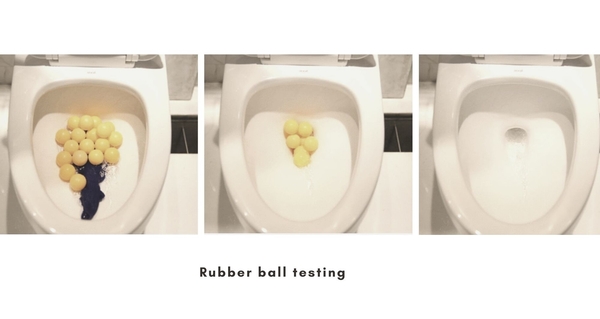
- Cleaning performance is distinct from flushing power and deserves separate evaluation. A toilet can flush solid waste effectively while still leaving residue on the bowl surface, requiring multiple flushes or brush use — both of which drive customer dissatisfaction. The key factors are rim design (rimless designs, also called open-rim or tornado flush, eliminate the under-rim ledge where bacteria and residue accumulate), water distribution across the bowl during the flush cycle, and the combination of glaze quality and trapway design discussed elsewhere in this guide. When testing cleaning performance, evaluate multiple flush cycles without cleaning in between to see how residue accumulates.
- Batch consistency is the real test. A single demo unit flushing perfectly means little if production tolerances vary. Request data or documentation on their pass/fail rates and how non-conforming units are handled.
Table 3: Toilet Flushing Performance
| Checkpoint | What to Look For | Pass / Fail |
|---|---|---|
| Flush system type | Gravity / siphonic / pressure-assisted — suits target market infrastructure | ☐ Pass ☐ Fail |
| Water consumption | Meets local regulation (e.g. 6/4L EU, 1.28 GPF US, 4.5/3L Australia) | ☐ Pass ☐ Fail |
| MaP score | ≥ 500g residential; ≥ 800g commercial / project use | ☐ Pass ☐ Fail |
| Leak test — tank to bowl | Dye test: no colour transfer after 30 minutes | ☐ Pass ☐ Fail |
| Leak test — base seal | No moisture at base after multiple flushes | ☐ Pass ☐ Fail |
| Cleaning performance | Minimal residue after multiple flush cycles without brushing | ☐ Pass ☐ Fail |
| Batch flush consistency | Supplier provides end-of-line test protocol and pass rate data | ☐ Pass ☐ Fail |
5. Hardware & Fittings — Where Cheap Toilets Cut Corners
The ceramic body of a toilet can last decades. The fittings that make it function will not — unless they’re specified correctly. For importers and distributors, fitting quality determines your after-sales cost, your warranty liability, and ultimately how customers remember your product.
When check the toilet hardware and accessories, it’s import to check these issue: the flush fitting quality, seals and gaskets, cistern hardware, and toilet seat cover.
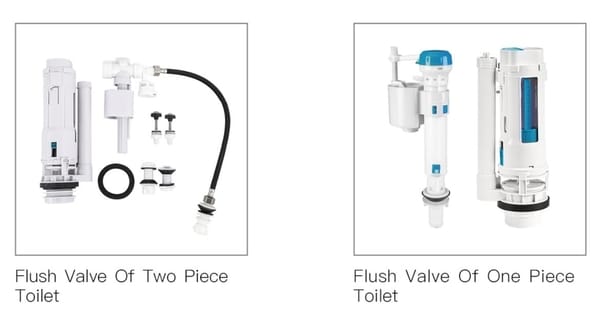
- Flush valve and fill valve quality is the most operationally critical specification in this category. Industry-standard components from manufacturers like Fluidmaster (widely used in North America), Geberit (European standard), or equivalent certified suppliers indicate a manufacturer who is building for longevity.
Ask suppliers to identify their fittings’ manufacturer and request component specifications.
toilet flushing fitting - Seals and gaskets determine whether the toilet leaks over time. The quality of rubber compounds used in tank-to-bowl gaskets and flush valve seals varies enormously. Low-grade rubber hardens, cracks, and fails within a few years.
- Cistern hardware (bolts, washers, and mounting hardware) should be stainless steel or high-quality zinc alloy as a minimum. Chrome-plated mild steel hardware corrodes rapidly in humid bathroom environments, leading to staining and structural failure. This is a detail that’s easy to miss in a showroom sample but becomes obvious within a year of installation.
- Toilet seat and cover is often treated as a secondary accessory, but for distributors and project buyers, it directly affects the perceived quality of the entire unit.
- Toilet seat cover key evaluation points include: hinge quality and mechanism (slow-close hinges are now a baseline expectation in mid-to-high-end markets, and cheap hinges are one of the most frequent complaint items), seat material UF resin (urea formaldehyde) , and PP (polypropylene) are common durable options in cover seat; it has a higher density, feels more substantial, and resists yellowing). And whether the seat is quick-release for cleaning (increasingly a standard feature in project specifications for hotels and serviced apartments).
When evaluating a toilet package, always test the seat and cover independently — close it slowly, open it fully, check the hinge resistance, and look for any flex or instability in the seat itself.
6. Dimensional Accuracy & Consistency — The Bulk Order Reality Check
Dimensional accuracy is where sample-based evaluation most frequently fails buyers.
- Critical dimensions to verify during any product evaluation include: the rough-in distance (from the wall to the centre of the floor outlet), the fixing hole spacing, the tank-to-bowl connection points, the overall height (especially for ADA/accessibility compliance in relevant markets), and the water inlet position and thread specification. Each of these, if inconsistent, creates installation problems that generate contractor callbacks and erode your reputation.
- Why samples and bulk orders diverge comes down to production tolerance management. In high-volume ceramic production, moulds wear over time, kiln temperatures fluctuate, and drying shrinkage varies with raw material batches.
- For project buyers specifically, dimensional consistency is non-negotiable. Before approving a product for a large project, request production samples from at least two separate production batches and measure them independently.
- What to measure on arrival when conducting incoming quality control: use a measuring tape and callipers to check rough-in distance, fixing hole spacing, and overall footprint against the approved specification. Check that the base sits completely flat on a level surface (place the unit on a known-flat surface and check for rocking). Verify that the tank aligns correctly with the bowl and that all connection points mate without forcing. These checks take minutes per unit on a sample basis and can save significant cost in installation rework.
7. Toilet Evaluation Checklist
| # | Evaluation Area | Key Checkpoints | Checked? |
|---|---|---|---|
| 1 | Ceramic Body | • Vitrification rate / water absorption ≤ 0.5% | ☐ Pass ☐ Fail |
| • Body density (tap test: clear ring = good) | |||
| • Check for pinholes, hairline cracks, warping | |||
| 2 | Glaze Quality | • Surface uniformity (check under raking light) | ☐ Pass ☐ Fail |
| • Consistency across multiple units / batches | |||
| • Inspect hidden surfaces: rim underside, trapway interior, base edges | |||
| 3 | Trapway Design | • S-trap or P-trap matches target market | ☐ Pass ☐ Fail |
| • Internal diameter ≥ 50mm (70mm+ preferred) | |||
| • Fully glazed trapway interior | |||
| • Rough-in distance matches market standard | |||
| 4 | Flushing Performance | • Flush system type suits target market | ☐ Pass ☐ Fail |
| • Water consumption rating meets local regulations | |||
| • MaP score ≥ 500g (800g+ for commercial use) | |||
| • Water leaking test: tank-bowl junction + base seal | |||
| • Cleaning performance: residue after multiple cycles | |||
| 5 | Hardware & Fittings | • Flush/fill valve: branded or certified supplier | ☐ Pass ☐ Fail |
| • Seals and gaskets: EPDM rubber material | |||
| • Cistern hardware: stainless steel or quality zinc alloy | |||
| • Toilet seat: UF resin, slow-close hinge, quick-release | |||
| 6 | Dimensional Accuracy | • Rough-in distance verified against spec | ☐ Pass ☐ Fail |
| • Fixing hole spacing consistent across units | |||
| • Base sits flat with no rocking | |||
| • Check samples from at least 2 separate production batches |
Toilet Information & FAQ
Q 1: What is the standard toilet height?
The standard toilet height is 15 inches to 16 inches from the floor to the wc closet bowl rim. It is the standard range for most residential toilets.
Q 2: What is the comfortable toilet height?
The comfort height is 17 inches to 19 inches from the floor to the water closet seat. This is the standard range for most commercial and ADA-compliant toilets. And the ADA also requires that cover seats cannot be sprung to automatically return to a raised position. It’s typically design for elderly and physically disabled people to use.
Q 3: What is the dual flush toilet?
The dual flush toilet is a water-efficient design, which uses two different flushes — one setting for liquid waste and one setting for solid waste. This has the benefit of reducing water usage by up to 50%.

Q 4: What is single flush toilet?
The single flush toilet is the traditional type of wc closet, and it uses just one flush for all waste. This may use more water than a dual-flush model but can still be considered water efficient.
Conclusion
Evaluating toilet quality as an importer or distributor isn’t about being suspicious of suppliers — it’s about having a consistent, product-level framework that protects your business regardless of who you’re buying from. The seven dimensions covered in this guide give you that framework:
Ceramic body – Glaze quality – Trapway design & rough-in compatibility – Flushing performance – Hardware and fittings – Dimensional accuracy.
Use these criteria to build a standardised evaluation checklist for every new product you consider.
Once you’ve assessed the product itself, the next step is evaluating whether the supplier behind it can deliver that quality consistently at scale — and ensuring the product meets the certification requirements of your target market. These topics are covered in depth in our related guides:
The Ultimate Guide to Chinese Sanitary Ware Brands for Importers,
Product Testing and Certifications for Imported Sanitary Ware.
Looking for a toilet supplier that meets these standards?
We’re a sanitary ware supplier working with distributors and project buyers globally. If you’re looking to build a reliable supply partnership — not just a one-off order — we’d be happy to start a conversation.