
In today’s global market, porcelain tiles play a significant role in the construction and design industries, making them a sought-after commodity for importers worldwide. This blog post aims to delve into the advantages and disadvantages of porcelain tiles, offering valuable insights for international importers looking to source high-quality tiling solutions.
Let’s get started.
What Is Porcelain Tile?
Porcelain tiles are a type of ceramic tile known for their durability and low water absorption (less than 0.5%). Made from finely clay and fired at a higher temperature, these tiles are much denser and harder than standard ceramic tiles.
Whether you’re working on a residential project or a commercial building, porcelain tiles are a reliable choice for middle and high-traffic areas where longevity and performance matter.
Want a deeper information of porcelain types and how to choose, read our post: types of porcelain tiles: Essential knowledge for importers
Benefits of porcelain tiles
Porcelain tiles have several noteworthy benefits that make them an ideal choice for both residential and commercial floor and wall applications.
1. Highly durable and scratch-resistant
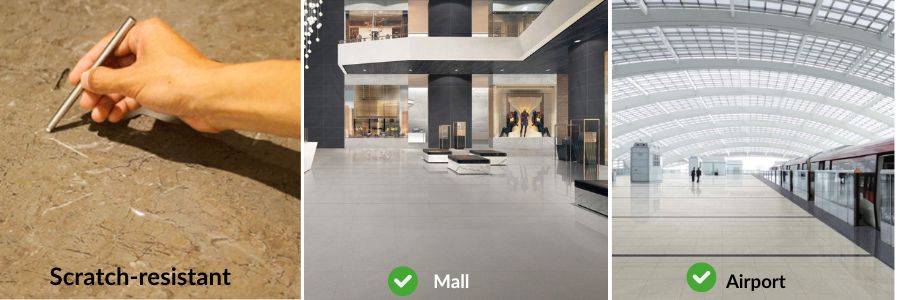
Porcelain tile is well known for its exceptional durability and resistance to scratches. This is primarily due to the use of highly refined clay and high-temperature firing during its production. These factors contribute to its denser structure and lower air pockets compared to ceramic tile.
Because of its superior abrasion and wear resistance, porcelain with a high density is a great option for heavy-traffic areas. Whether it’s in a restaurant, supermarket, or airport, porcelain tiles can stand up to the challenge.
Furthermore, the scratch-resistant nature of porcelain tile adds to its appeal. It can withstand damage from dropped objects, furniture movement, and general rough usage, all without leaving a trace. Even after a long time of usage, it still looks new.
2. High breaking strength and hardness
Brittleness is a fatal weakness of ceramic materials, primarily determined by the properties of their chemical bonds and crystal structure. However, porcelain tiles, with their high density and firing temperature, exhibit exceptional breaking strength and hardness in comparison to other types of ceramic tile. As a result, they are less prone to fracturing or sustaining damage when subjected to the same external force.
3. Waterproof, making it suitable for both indoor and outdoor use.
Porcelain tile’s low water absorption rate is one of its biggest benefits, making it a great option for locations where water exposure is a concern. Compared to most other flooring materials, porcelain can withstand dampness and water better because it is practically waterproof.
This feature makes porcelain tile a perfect choice for bathrooms, kitchens, outdoor patios, or any other areas where the tile may be exposed to water regularly.
Moreover, the water resistance of porcelain tiles extends their lifespan in outdoor applications as they are less affected by seasonal weather changes. Their resistance to frost and heat makes them a suitable choice for outdoor areas in various climates. They can endure freezing cold winters and scorching summer heat without cracking, or warping. With their durability under diverse weather conditions, porcelain tiles are a smart investment for both indoors and outdoors.

4. Excellent stain resistance, easy to clean
It should be noted that one key advantage of ceramic tile is their ability to resist stains. Due to their low water absorption rate, spills do not easily permeate the surface, preventing staining. As a result, they are an excellent choice for areas like kitchens and bathrooms where spills are common.
Additionally, porcelain tiles are easy to clean. Dirt and stains stay on the surface, making them easy to wipe away. A simple sweep and mop with a mild detergent are usually enough to keep your porcelain tiles looking fresh and new. For stubborn stains, porcelain tiles can withstand stronger cleaning agents without losing their color or finish.

Disadvantages of porcelain tiles
Despite the numerous advantages of porcelain tiles that make them an attractive choice for various applications, it is essential to consider the full picture. As with all materials, porcelain tiles also have their share of drawbacks. Acknowledging these potential issues will allow for an informed decision that takes into account both the pros and cons. Now, let’s delve into the less appealing aspects of porcelain tiles.
1. More expensive than ceramic tile
Porcelain tends to be more expensive compared to ceramics. The high-quality material and manufacturing processes involved contribute to the higher price tag. This may not be ideal for those on a tight budget.
2. Difficult to install and cut
Due to their dense material composition, porcelain tile installation can be complex and time-consuming, especially if you’re not experienced in tile installation. Since porcelain tile is heavier and has high hardness, it may require some professional tools for cutting and carrying it. This is especially true for intricate designs or large format tiles, which can be challenging to install properly.
3. Potential for peeling off due to low water absorption rate

A significant property of porcelain tile is practically waterproof. Although this feature is generally beneficial, it may cause problems if these tiles are installed on walls. The poor rate of water absorption can prevent the tile from properly adhering to the wall, potentially causing hollow spaces behind the tile or even leading to tile delamination over time.
Having looked at the pros and cons of porcelain tiles, it’s clear that these tiles offer a compelling balance of price, durability, and practicality, despite some challenges. However, to further enrich our understanding and make an informed choice for our flooring or wall applications, we should also consider other options. Let’s now turn our attention to another popular material in the tiling industry: ceramic tile.

Is Porcelain Tile Right for Your Market or Project?
Choosing the right tile for your project or market involves considering various factors such as budget, design goals, and the specific demands of the space. Porcelain tiles are an excellent choice if you prioritize durability, ease of maintenance, and long-lasting performance in both residential and commercial applications.
For High-Traffic Areas & Durability:
Porcelain tiles stand out in spaces with heavy traffic, like airport, supermarket, hospital, hotel lobbies, commercial spaces, and busy households. Their ability to resist scratches, wear, and water damage makes them a durable and low-maintenance flooring solution. Plus, with their high-density composition, they offer exceptional resistance to cracking or chipping over time.
Design Flexibility:
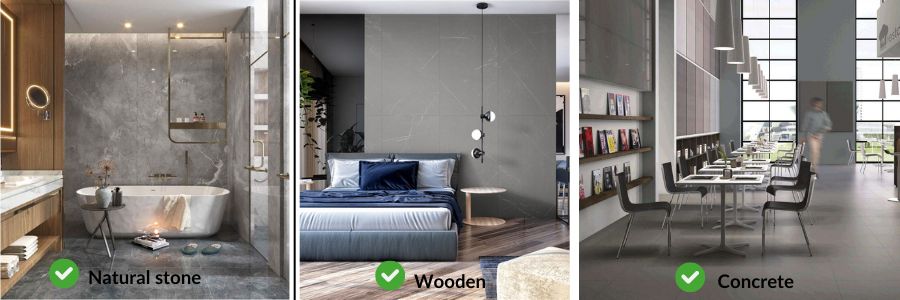
Porcelain tiles come in various styles, mimicking the appearance of natural stone, wood, and other materials while maintaining their superior quality. This versatility allows you to meet a broad range of design preferences, from sleek and modern to rustic and traditional. If your market demands trend-forward or high-end designs, porcelain is an excellent fit.
Moisture Resistance:
In areas prone to moisture, such as bathrooms, kitchens, or outdoor spaces, porcelain’s waterproof properties make it a top choice. It can withstand temperature fluctuations and weathering, ensuring your installations remain in top condition for years, even in challenging environments. Which are other floor materials can not compete, such as wooden flooring or vinyl flooring.
Want to know the comparision of different material for floors? Read our post as below:
1. Tile vs Wood Flooring: Pros, Cons, and Market Opportunities for Importers,
2. Tile vs. Vinyl Flooring: Which Offers Better ROI for Importers?
Considerations: Cost & Installation
However, porcelain tiles can be more expensive upfront than other options like ceramic tiles. Additionally, their installation complexity—due to their density—may require professional handling, especially for larger or intricate projects. If you’re working with a tighter budget or planning a DIY project, it’s essential to weigh these factors carefully.
Ultimately, porcelain tiles are a solid investment for projects that require a combination of durability, design variety, and practical functionality. Evaluate the specific needs of your space, the type of traffic it will endure, and your budget to determine if porcelain tiles will provide long-term value and performance.
Porcelain vs Ceramic: What’s the Difference?
Porcelain and ceramic tiles may look similar, but they perform quite differently. Porcelain tiles are denser, lower water absorption, and more durable, making them better suited for high-traffic areas, commercial projects, and outdoor use. Ceramic tiles, on the other hand, are lighter, easier to cut, and more budget-friendly—ideal for low-traffic spaces or cost-sensitive markets.
In simple terms, if your priority is performance and long-term reliability, and especially for floors, porcelain is usually the better choice. If your focus is lower cost and easier installation, ceramic tiles can be a more practical option.
Want to know more information about porcelain and ceramic tiles, read our post Ceramic vs Porcelain Tile, Tile Comparison Guides.
Conclusion
In conclusion, porcelain tile offers a blend of durability, aesthetics, and functionality that appeal to importers seeking premium tiling solutions for international markets. By weighing the pros and cons of importing porcelain tile, you can make informed decisions that align with their business objectives and customer needs.
FAQ
1. Are ceramic tiles better than porcelain tiles?
Not necessarily—it depends on your needs. Porcelain tiles are more durable and water-resistant, making them better for high-traffic or outdoor use. Ceramic tiles are more affordable and easier to install, which makes them suitable for low-traffic or budget-focused projects.
2. Is polished porcelain tile slippery?
Yes. Because polished porcelain tile has a shiny finish that can sometimes make it slippery, especially when wet. This smooth surface is more prone to being slick compared to other finishes like matte or textured tiles. To address slipperiness, consider using rugs or mats in areas with polished porcelain tile, especially in bathrooms or kitchens where water spillage is common.
3. Does porcelain tile break easily?
No, porcelain tile is renowned for its durability and strength. When used correctly, it is not prone to breaking. In contrast, ceramic tile may crack or chip under sharp impact or if an object falls on it.
4. Are porcelain tiles good for outdoor use?
Yes, their low water absorption and resistance to temperature changes make them ideal for outdoor environments.