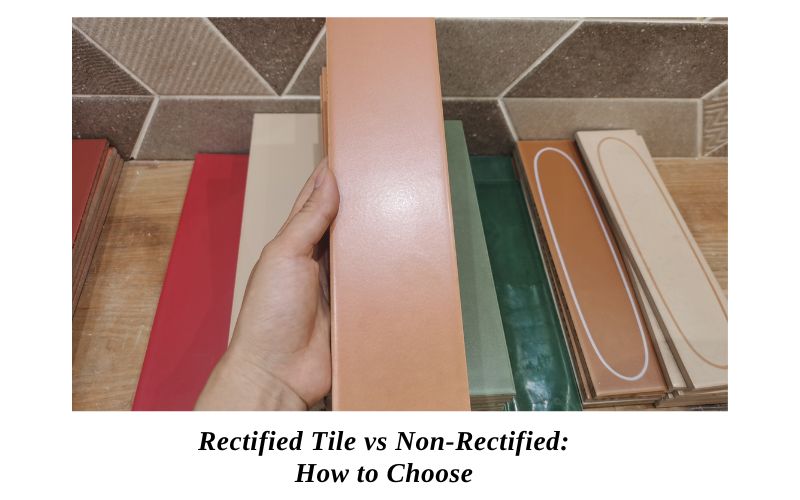
Do you have any experience with non-rectified or rectified tiles? If you have to pick among them, how do you make a decision?
In this blog post, we will explain the meaning of non-rectified and rectified tiles, as well as the differences between the two, and the recommended uses for each. By understanding these variations, you can make decisions that meet the client’s requirements and preferences if you know about them. Let’s begin.
I. What is rectified tile?
Rectified tile is a kind of porcelain or ceramic tile that has had all of its edges mechanically cut and polished to achieve precise dimensions and clean, straight edges. This precision is accomplished by a process called rectification, which involves cutting the tile after it has been fired in a kiln. It’s also the last manufacturing procedure before the tile quality inspection and packing.
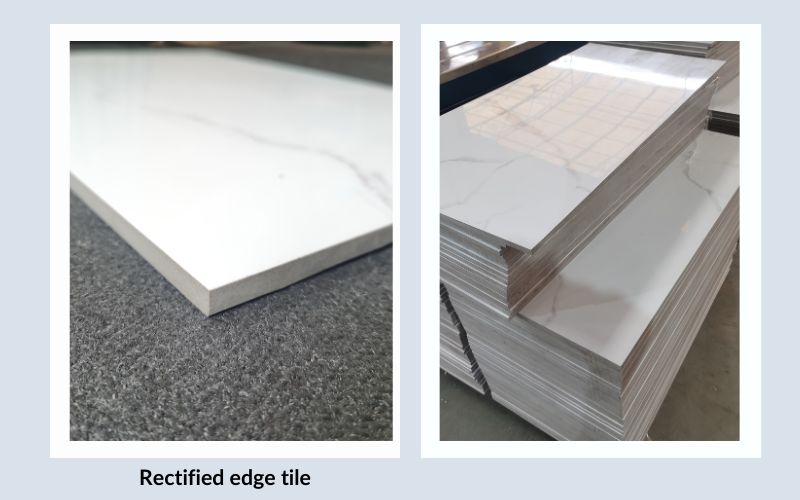
This cutting process, often done with a laser machine or a water jet, ensures that each tile is the same size, and has perfectly straight edges. This makes them ideal for modern, minimalist designs that want clean lines and a sleek look.
Not only does this rectified process make the tiles look better, but it also makes them easier to line up when they’re being installed, making rectified tiles a great choice for spaces where detail and precision matter.
If you’re sourcing these tiles from China, it helps to understand what to look for when buying tile from Chinese suppliers before placing an order.
II. What is non-rectified tile?
Non-rectified tile, also known as pressed tile or cushion edge tile, retains the original edges formed during the manufacturing process, without undergoing the additional step of mechanical finishing that characterizes rectified tiles. These tiles are cut into shapes from the pressing machine and have a basic edge before being fired in the kiln when they are still clay bodies.
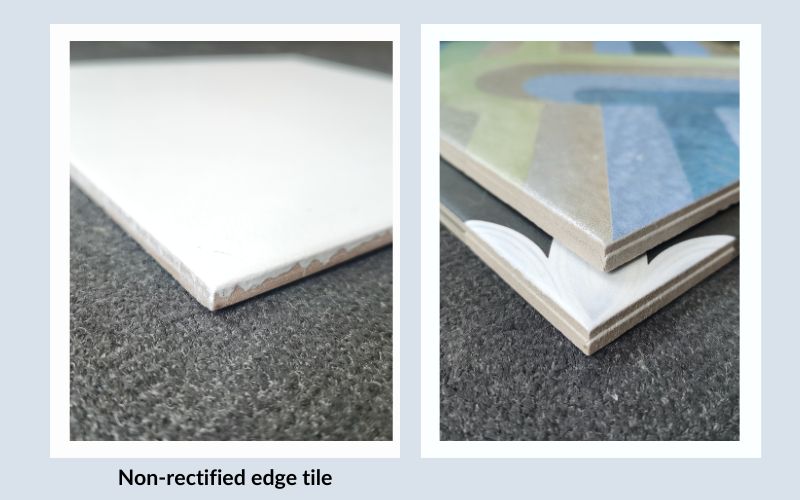
As a result, they may have slight variations in size and shape due to the high temperature of the kiln. Such differences can give displays a more traditional, natural, and handmade look.
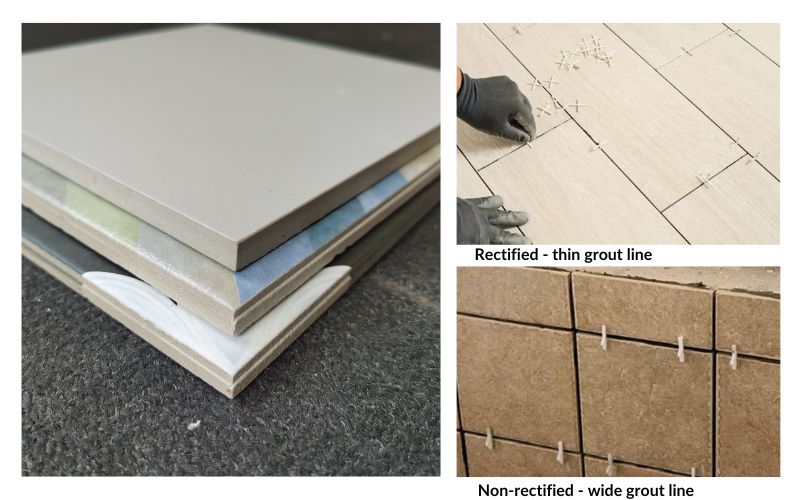
Because there are size variations for each non-rectified tile, when installing, they generally need a wider grout line than rectified tiles, which can add texture and a feeling of warmth to a space, making them good for projects with a homely, earthy, rustic or vintage-inspired style. This also makes them a natural fit alongside glazed tiles, which are commonly used to create that same warm, traditional feel.
III. Differences Between Rectified and Non-Rectified Tiles
The primary differences between rectified and non-rectified tiles are their edges and overall dimensions.
Rectified tiles have precise sizes and smooth, straight edges because of the rectification procedure. Because all the tiles are exactly the same size, the grout lines can be thinner—usually down to 1/16 inch, which can help floors or walls look perfectly flat and smooth. The thinner grout lines also make it easier to clean because dirt has less room to gather.
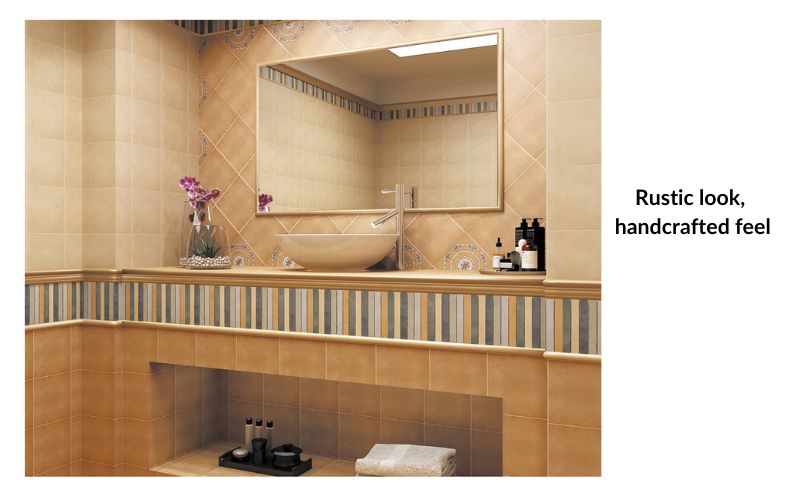
On the other hand, non-rectified tiles have a more classic look due to their natural, slightly irregular edges. Even though the differences are small, they mean that the grout joints have to be larger, typically between 1/8th and 3/16th of an inch. These wider grout gaps bring out the natural beauty of the tiles, which also gives the installation a unique look and a handcrafted feel.
However, they may also require more maintenance over time, as the wider grout joint can collect more dirt.
When considering the cost, rectified tiles are often more costly than non-rectified tiles because they need extra cutting. Luckily, the precise edges and uniformity might minimize installation time and labor, thus covering the higher initial cost.
Finally, the decision between rectified and non-rectified tiles should be based on the project’s specific requirements, such as the desired appearance, the fitting space, and the available budget. By knowing the differences between these two types of tiles, you can be sure that the product you choose fits with the overall design vision and functional needs of the space.
IV. Common applications of rectified porcelain tiles
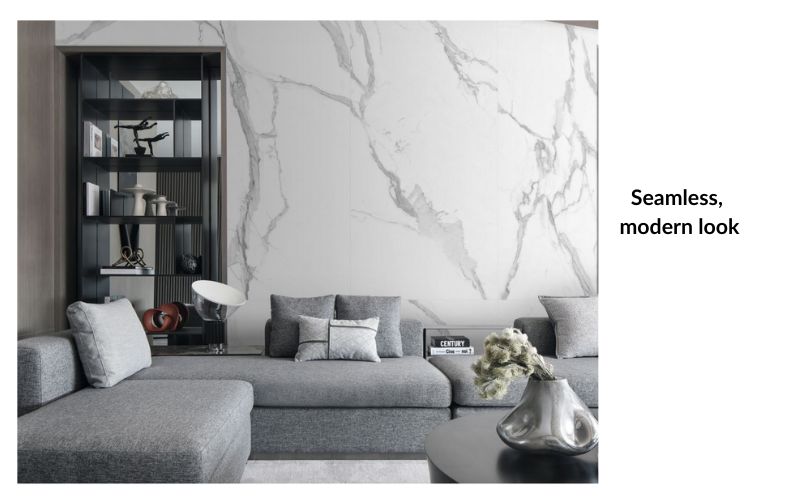
Because they are accurate and consistent, rectified porcelain tiles are often used for the floor. Particularly for large format tiles with marble or natural stone patterns, the thin grout lines and smooth edges can make the tiles look like they are one piece. Which are perfect for a hotel lobby or living room.
Besides, they can also be used outdoors, in patios or pool surrounding areas.
Aside from floors and outdoors, rectified tiles are popular for walls in bathrooms and kitchens as well. The smaller grout lines enhance visuals and make maintenance easier, which can reduce the trouble of edge treatment in moisture-prone areas.
Thanks to its versatility in floors, walls, and outdoor areas, rectified tile is a popular choice for residential and commercial designs.
V. Common applications of non-rectified tiles
Non-rectified tiles, with their slightly irregular edges, can increase any space with a more traditional and natural appearance. From kitchens and bathrooms to living areas and restaurant flooring, non-rectified tiles can have a wide range of applications in both residential and commercial spaces, which complement various design styles.
VI. Conclusion
Whether you choose rectified tile or non-rectified, the key is to understand the differences and make an informed decision based on your specific needs and preferred styles. Both types have their own unique advantages and can create stunning effects when applied appropriately.
If you want any assistance or have any questions, do not hesitate to contact our team.
Frequently Asked Questions about rectified tile and non-rectified tile
What are the pros and cons of rectified tile?
Rectified tiles offer a modern, uniform appearance with minimal grout lines, making them easier to clean and maintain. However, they tend to be more expensive and may require more precise installation to ensure the intended seamless look.
Is rectified tile harder to install?
Yes, rectified tile can be harder to install due to its precise edges and thinner grout line. Installers require more skilled installation including a level substrate, and accurate spacing and alignment for a seamless look.
Are rectified tiles better than non-rectified tiles?
Whether rectified tiles are “better” depends on your project’s needs. The look of rectified tiles is more fashionable, while the look of non-rectified tiles is a bit antique or vintage, and they are often more cost-effective.
Does rectified porcelain tile chip easily?
Rectified porcelain tile is no more prone to chipping than non-rectified tile when properly installed. The chipping risk mainly depends on the tile’s material quality, and the care taken during installation and use, rather than whether the edge is rectified or non-rectified.
Rectified and non rectified tile, which one is better for uneven surfaces?
Non-rectified tiles perform better on slightly uneven substrates due to wider grout joints that can absorb minor inconsistencies. But if the flatness is beyond the torrence of the standard, it’s hard to install even for non rectified tiles.
Do non-rectified tiles have any advantages?
Absolutely. They are more forgiving during installation, often more cost-effective, and ideal for rustic or traditional designs.